

7 Best Order Management Systems (OMS) for Composable Commerce

If you’re running a Magento or Shopify store and starting to feel the strain of managing orders across multiple channels, you’re not alone. Most merchants hit a wall somewhere between manual processes and native platform tools that simply weren’t built for scale.
The right Order Management System connects your inventory, fulfillment, and customer experience into one place. But picking the wrong one means expensive implementations, integration headaches, and a system your team won’t actually use.
We’ve broken down the 7 best OMS platforms that work well in Magento and Shopify environments, what they’re good at, where they fall short, and how to figure out which one fits your operation.
So, let’s start the hunt!
Best Composable Order Management Systems (OMS)
Why Composable Order Management Systems (OMS), you ask? Well, let’s rewind a bit and take a closer look at the retail industry. Over the past decade, it has undergone a dramatic transformation.
Shoppers now demand unified experiences that offer them a consistent and connected journey across all channels. The expectations are high, and customers are more than willing to pay a premium for the privilege.
So, let’s not waste more time and explore the best OMS providers to find out what works best for your business!
1. Kibo Order Management
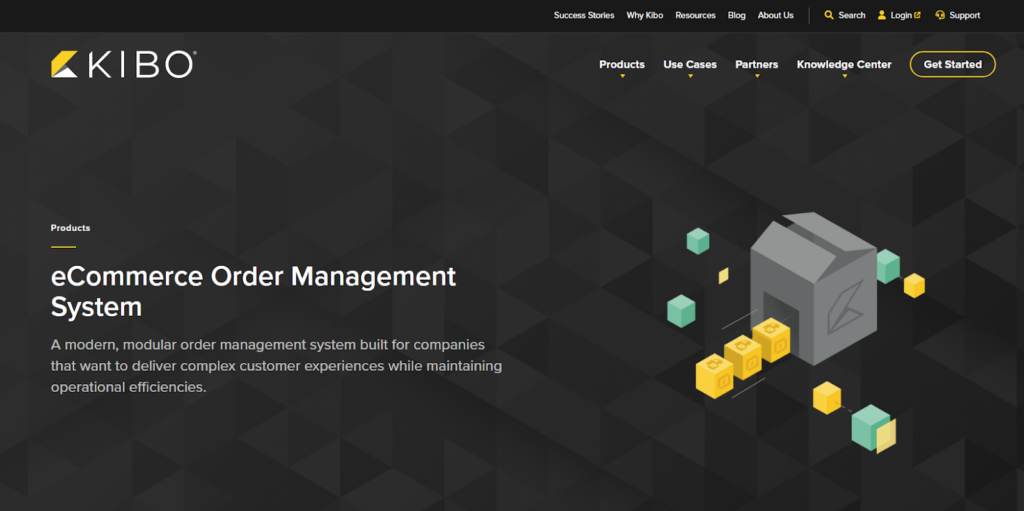
The first position is given to the fabulous eCommerce OMS solution by Kibo Commerce!
Kibo is a versionless, composable order management software that empowers businesses to simplify the delivery of complex customer experiences, enhance operational efficiencies, and reduce the cost of serving customers.
It offers a modern, modular OMS solution designed for high-volume retailers, manufacturers, distributors, and wholesalers. It breaks down the barriers between siloed order management data and your customers across various channels.
Key Features
- Unified View of Real-Time Data: Kibo provides a unified view of all real-time data across locations, ensuring that you have a comprehensive understanding of your inventory and order information.
- Modular Capabilities: Incrementally implement modules to simplify complexity. Enhance network-wide inventory visibility, launch fulfillment programs like dropship or BOPIS, fine-tune routing logic, and allocate future stock efficiently.
- Real-time Inventory Optimization: Kibo’s intelligent inventory sourcing and allocation algorithms help you optimize stock levels and ensure that you can respond quickly to fluctuating demand, reducing the risk of overstock or stockouts.
- Intelligent Order Routing: Kibo’s Order Routing UI makes intelligent decisions to source inventory from the most optimal location based on custom business rules.
- Customizable Fulfillment Options: Utilize out-of-the-box fulfillment workflows or create your own. You can integrate with carriers, improve fill rates, and lower labor costs.
- Rich Reporting and Analytics: Seamlessly track and segment data points like revenue generation, inventory, orders, shipping costs, and more. Set up real-time alerts to notify teams of critical thresholds.
Why Kibo Order Management?
- Frictionless Scalability: Kibo Order Management is designed to seamlessly scale with your business growth. As your order volume increases, Kibo can effortlessly adapt to accommodate your evolving needs without major disruptions.
- Enhanced Customer Engagement: Kibo’s composable architecture empowers you to create unique, personalized customer experiences.
- Cost-Effective Order Splitting: Kibo automates the splitting of orders into multiple shipments, reducing the cost of split orders. This feature helps minimize shipping expenses and enhances operational cost-efficiency.
- Universal API Coverage: Kibo offers universal API coverage, allowing you to own and modify the underlying source code at a microservice level. This level of customization and control sets Kibo apart as a highly adaptable and extensible solution.
- Best for Magento/Shopify if: You’re a high-volume retailer on Magento Commerce with complex routing and fulfillment needs across multiple locations. Kibo’s API-first architecture integrates well with Magento’s backend but requires technical resources to set up.
Limitations of Kibo Order Management
- The reports are not customizable enough.
- The dashboard is too plain and could include more information about orders.
Pricing
The pricing is not open! Please contact Kibo Commerce for a personalized pricing quote to suit your specific business needs.
2. Blue Yonder
Number 2 is — Blue Yonder!
All credit goes to its innovative microservices-based approach, which transforms order management and ensures rapid time-to-market, scalability, and outstanding performance. This approach encompasses various aspects, from inventory availability to order orchestration and fulfillment, delivering a competitive edge that modern businesses need.
Blue Yonder’s OMS redefines how commerce happens by removing the hindrances posed by lengthy upgrades and technical obstacles. With a domain-centric microservices framework, businesses can start with what they need today, knowing they can expand their capabilities tomorrow.
Handling thousands of transactions per second, Blue Yonder guarantees a response time that can handle any volume of transactions. With over 40 independent microservices that can work seamlessly together, businesses can achieve results in weeks, not years.
Key Features
- Microservices-Based Applications: Blue Yonder offers microservices for inventory availability, order services, order fulfillment, and more, ensuring real-time visibility and efficient processing.
- Adaptive Fulfillment & Warehousing: Whether it’s curbside pickup, buy online/pickup in-store (BOPIS), or same-day delivery, Blue Yonder optimizes fulfillment operations to meet customer expectations.
- Order and Fulfillment Insights: Advanced machine learning algorithms provide end-to-end visibility and actionable insights to improve order fulfillment.
Why Blue Yonder?
- Real-time Availability: Blue Yonder offers real-time inventory availability data, improving customer engagement and conversion rates.
- Personalized Experiences: It enables recommendations and delivers the right product at the right time through the customer’s preferred channel.
- Faster Integration: Blue Yonder allows for seamless integration of API-based microservices into existing solutions without the need for a complete overhaul.
- Industries support: Blue Yonder’s microservices go beyond the ordinary and cater to a wide range of industries, including retail, manufacturing, and third-party logistics (3PL), including D2C, B2C, and B2B.
- Best for Magento/Shopify if: You’re an enterprise Magento merchant in manufacturing or retail with high transaction volumes and need microservices-level flexibility. Not the right fit for smaller Shopify stores due to cost and implementation complexity.
Limitations of Blue Yonder
- The price is relatively high for small companies.
- The user interface could be improved to be more user-friendly.
- The order management process can be complex for new users to learn.
Pricing
Pricing for Blue Yonder’s OMS varies based on the specific needs and scale of the business. It’s recommended to contact Blue Yonder directly for a customized quote.
3. Fluent Commerce
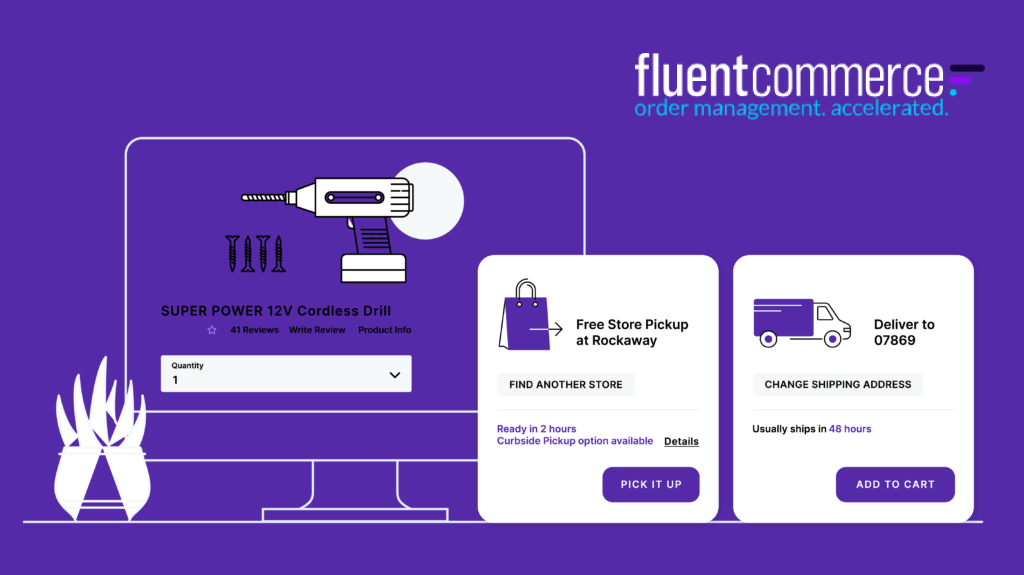
Next comes the highly adaptable Order Management System (OMS) that aligns perfectly with your omnichannel strategy!
Fluent Commerce, a cloud-native platform designed for future growth, stands out as an exceptional choice of composable OMS solutions. Its innovative features empower you to take control of your inventory, fulfill orders efficiently, and deliver exceptional customer service.
With Fluent Commerce, you gain the power to orchestrate and optimize order management processes, reduce operational costs, and enhance the overall customer experience.
Key Features
- Product Availability: Real-time control over stock, reducing overselling and offering accurate in-store pickup lead times.
- Order Management: Automate order routing and optimize delivery costs for efficient order processing.
- Global Inventory: Manage inventory for the enterprise with near real-time SKU counts and segment stock according to your requirements.
- Store Fulfillment: Utilize store stock for online orders, prioritize sourcing, and automate alerts for a seamless in-store pick-and-pack experience.
Why Fluent Commerce?
- Inventory Accuracy: Reduce overselling and stockouts in near real-time.
- Cost Efficiency: Optimize order routing to minimize delivery costs.
- Fulfillment Diversity: Fulfill orders from Distribution Centers, Stores, 3PLs, and DSVs.
- Tailored Tracking: Offer custom attributes and data models for tailored tracking.
- Operational Excellence: Streamline store performance and staff experience.
- Micro-Fulfillment: Enable dark stores and mini Distribution Centers.
- Customer Experience: Enhance customer touchpoints and increase flexibility.
- Best for Magento/Shopify if: You’re a mid-to-large Magento merchant with omnichannel ambitions. Fluent Commerce has documented integration patterns for Magento and works well when you have a dedicated technical team to manage configuration.
Limitations of Fluent Commerce
- Flexibility can be overwhelming for businesses without dedicated resources or extensive technical expertise.
- Limited features for mid-market businesses.
- Integration with legacy systems can be challenging.
- The dashboard’s stylish design may have some limitations for batch order operations.
- Some existing features (plugins) may no longer be available in the new release due to increasing security concerns
Pricing
Pricing for Fluent Commerce is available upon request, tailored to your specific business needs. You can contact the Fluent Commerce team for a personalized quote.
4. IBM Sterling Order Management
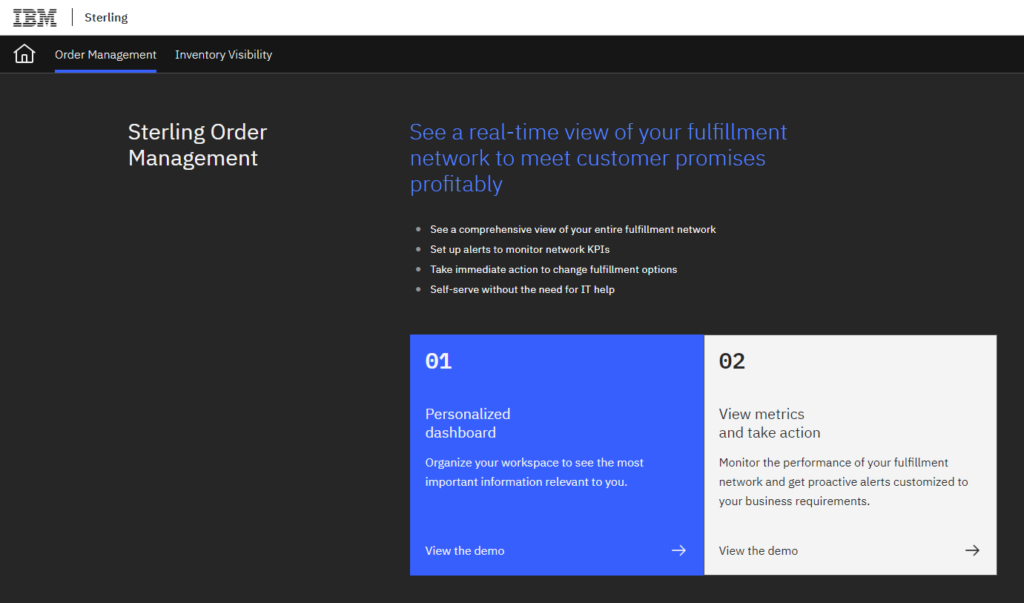
Now, let’s meet the popular and powerful platform!
IBM Sterling Order Management streamlines ecommerce management and fulfillment centers by providing a one-stop solution for all your sales channels.
It empowers businesses to efficiently track and manage inventory levels, coordinate third-party logistics, manage customer orders, shipping options, and returns while reducing packing and shipping costs.
What sets IBM Sterling Order Management apart is its ability to facilitate omnichannel order fulfillment processes, including real-time inventory and warehouse management, curbside pickup, buy online pickup in-store (BOPIS), and ship from the store (SFS).
It’s a versatile solution that caters to both large and small businesses, making them self-sufficient fulfillment companies.
Key Features
- Omnichannel Fulfillment: IBM Sterling Order Management excels in enabling businesses to fulfill orders seamlessly across multiple sales channels, ensuring a consistent and reliable customer experience.
- Cloud-Based Tools: The platform leverages cloud-based tools and apps, making ecommerce and warehouse management smarter and more efficient.
- Real-Time Inventory Management: Businesses can access real-time inventory information, preventing overpromising, lost sales, improper routing, and unexpected charges.
- AI-Powered Insights: The use of advanced intelligence and AI-powered insights allows businesses to scale ecommerce operations and maximize profitability.
Why IBM Sterling Order Management?
- Fast Deployment: IBM Sterling Order Management offers a rapid three-week time-to-market deployment for ship-from-store and enables businesses to quickly implement and start reaping the benefits.
- Cost Savings: The platform can yield significant savings, as evidenced by a staggering USD 4.2 million in new profit from improved order management and a remarkable 170% ROI in just three years.
- Enhanced Customer Experience: Businesses can uphold their commitment to customers with flawless order fulfillment management across every channel, enhancing the overall customer experience.
- Best for Magento/Shopify if: You’re a large enterprise running Magento with complex B2B order workflows, multiple warehouses, and an existing IBM tech stack. Not recommended for Shopify merchants or businesses without a dedicated implementation team.
Limitations of IBM Sterling Order Management
- High pricing: Sterling OMS is a more expensive solution than some of its competitors.
- Complex implementation: Sterling OMS is a complex solution that requires a dedicated implementation team.
- Limited browser support: Sterling OMS was previously only supported in IE, but it now supports a wider range of browsers.
- Limited integration with other IBM systems: Sterling OMS can only be integrated with other IBM systems through IBM Integration Bus (IIB).
- Outdated user interface: Some of the internal applications within Sterling OMS could use an upgrade from a look-and-feel perspective.
Pricing
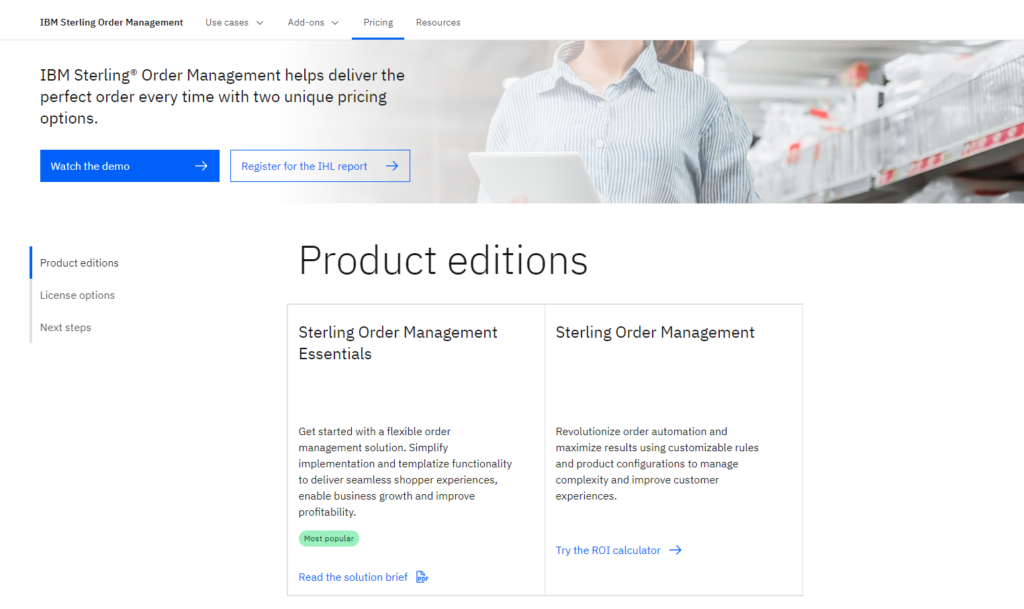
IBM Sterling Order Management comes with 2 editions. You can request the pricing for them.
5. Aptos
Next comes Aptos — the answer to the intricate demands of omnichannel fulfillment.
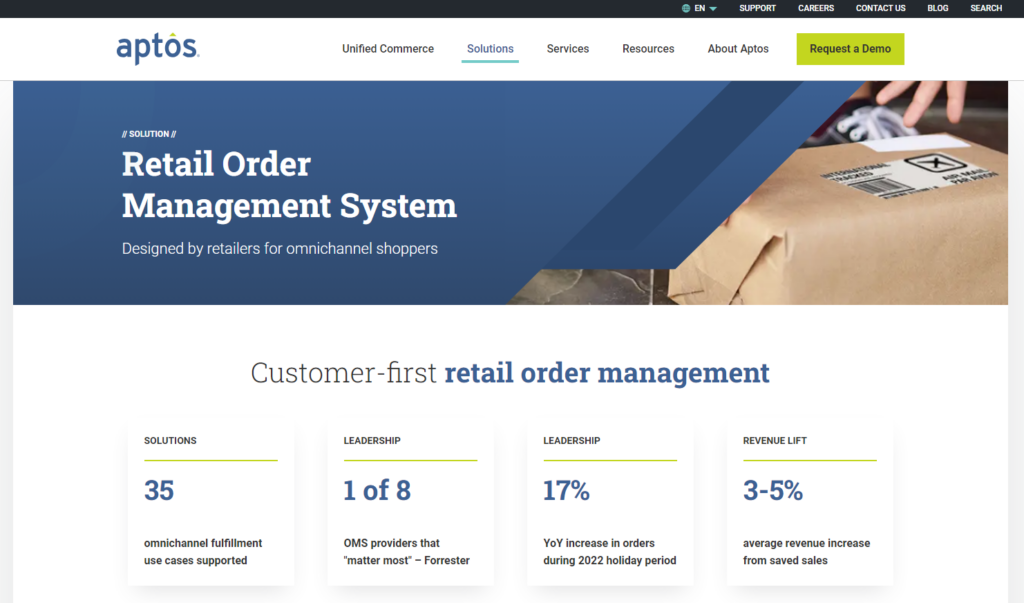
It stands out as a retail inventory and order management software designed with a deep understanding of retail’s evolving landscape. One of its most notable strengths is its support for an impressive 35 omnichannel fulfillment use cases.
Aptos excels in end-to-end order orchestration, offering various awesome features and support for a wide range of customer use cases. This, in turn, empowers retailers to make promises they can deliver profitably, from the shopping cart to the customer’s front door.
Key Features
- Real-Time Inventory Visibility: Aptos offers real-time inventory visibility and reservation capabilities, assuring accurate and efficient order fulfillment.
- End-to-End Order Processing: Retailers can manage all aspects of the order lifecycle from a single, centralized hub.
- Flexible and Intelligent Order Brokering Rules: The platform enables flexible and intelligent order brokering, accommodating various customer use cases.
- Powerful Store Fulfillment Options: Aptos provides retailers with powerful store fulfillment tools, adapting to the evolving role of physical stores in the customer journey.
Why Aptos?
- Customer-First Approach: Designed with the customer in mind, Aptos focuses on creating flexible and customer-centric shopping experiences.
- Revenue Growth: Users have experienced an impressive 3-5% average revenue increase from saved sales.
- Adaptive to Change: In a world of constant disruption, Aptos is designed to adapt to the future, ensuring you’re always prepared for change.
- Voice Computing Integration: Interfaces with voice computing devices make it easy to keep customers informed and engaged throughout their shopping journey.
- Best for Magento/Shopify if: You’re a mid-to-large retailer with physical stores and need strong store fulfillment capabilities alongside your Magento or Shopify setup. Works best for fashion and specialty retail verticals.
Limitations of Aptos
- Aptos needs to pick up the pace of innovation to stay competitive.
- Aptos can be complex to implement.
Pricing
Pricing for Aptos varies depending on the specific needs of your business, and it’s available only on request!
6. Körber
So, the sixth OMS on the list is Körber!
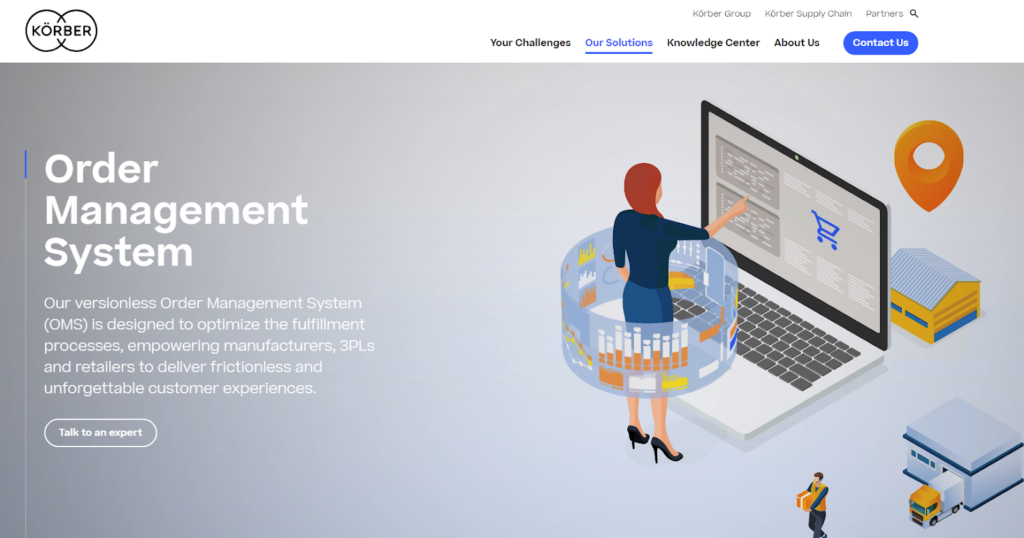
Körber’s Unified Commerce Platform stands out as a versionless application, regularly receiving monthly updates to ensure it remains at the forefront of innovation.
One of the standout features of the platform is its microservices SaaS architecture, seamlessly delivered in the cloud through Integration Platform as a Service (iPaaS).
Körber’s OMS is designed to be loosely coupled with ancillary modules such as iPaaS, point of sale (POS), Product Information Management (PIM), and drop shipping. This ensures a harmonious ecosystem and comprehensive solution for businesses, regardless of their size or complexity.
Key Features
- Unified Physical and Digital Commerce: Körber OMS seamlessly integrates physical and digital commerce, enabling businesses to deliver a unified shopping experience to customers.
- Modern Architecture: The platform’s modern architecture ensures scalability and future-readiness, adapting to the evolving needs of businesses.
- Improved Inventory Visibility: Enhanced inventory visibility prevents lost sales and stockouts, contributing to increased customer satisfaction.
- Microservices Architecture: Körber uses microservices architecture and a native integration framework for better flexibility and growth.
Why Körber?
- Proven ROI: Körber’s OMS offers a rapid return on investment (ROI) in as little as 9 to 12 months from implementation, making it a cost-effective choice for businesses.
- Exceptional Customer Service: The platform empowers agents to provide exceptional customer service, enhancing customer satisfaction and fostering brand loyalty.
- Consolidation and Cost Reduction: By consolidating the technology stack, Körber’s OMS mitigates risks and reduces the total cost of ownership, providing a trustworthy solution for businesses.
- Best for Magento/Shopify if: You’re a growing merchant on either platform who needs a versionless SaaS OMS with strong warehouse management built in. The microservices architecture connects to both Magento and Shopify via middleware.
Limitations of Körber
- The backend is complex and difficult to use.
- Körber can access the cloud system without permission, which is a security concern.
- There is no automatic new project prompt in Architect, which can lead to errors and wasted time.
Pricing
Same as other platforms, Körber OMS pricing is available on request. You can contact Körber directly for a customized quote.
7. Brightpearl
Finally comes the all-in-one platform — Brightpearl!
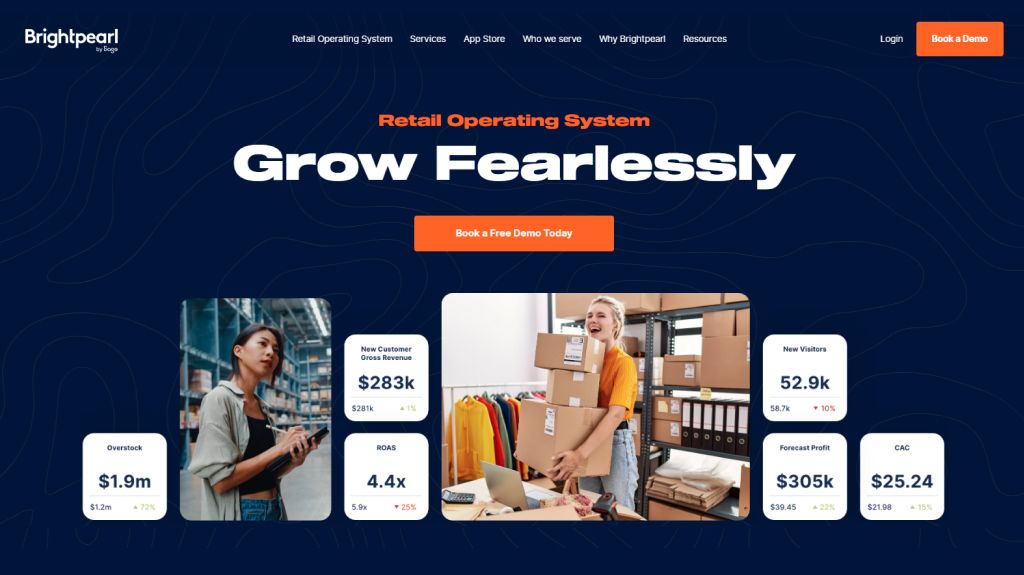
Brightpearl stands out as a Retail Operating System designed to help modern merchants grow fearlessly. Unlike traditional ERPs (Enterprise Resource Planning), standalone OMS, WMS (Warehouse Management System), or inventory management systems, Brightpearl takes a unique approach to empowering businesses.
This Retail Operating System is built specifically for the retail and wholesale industry, offering dedicated features that adapt to your eCommerce business requirements.
Brightpearl’s superior automation, insightful reporting, and advanced analytics ensure efficient order processing, inventory management, and growth, reducing human errors and labor costs.
Key Features
- Advanced Order Processing: Brightpearl excels at processing complex orders, including those involving multiple locations, FBA, dropshipping, or partial fulfillment.
- Plug & Play Integrations: Seamlessly connect with sales channels, 3PL, and accounting tools within minutes, eliminating costly customizations.
- Tailored Retail and Wholesale Features: Designed specifically for the retail and wholesale industry, it offers dedicated features that adapt to your unique business needs.
- Superior Automation: Brightpearl’s Automation Engine streamlines order processing, reducing human errors and lowering labor costs.
- Advanced Reporting and Analytics: Gain data-driven insights with Inventory Planner and comprehensive reporting and analytics, allowing informed decision-making and business growth.
Why Brightpearl?
- Rapid Implementation: Brightpearl boasts an impressive 97% success rate in implementations, thanks to its expert-led and carefully planned approach.
- Hyper-Scalability: Brightpearl offers a hyper-scalable system with purpose-built integrations and a thriving partner ecosystem, allowing you to grow without limitations.
- Streamlined Business Growth: Automation saves an average of two months per year, lowering labor costs by 50% and reducing human errors significantly by 65%.
- Dedicated Support: Brightpearl offers 24/7 fast customer support and ongoing business consulting at no extra cost.
- Best for Magento/Shopify if: You’re a Shopify merchant scaling past a few hundred orders per day and need a fast-to-implement solution with native Shopify connectivity. Brightpearl has one of the strongest native Shopify integrations on this list and is also a solid fit for Magento merchants in the mid-market range.
Limitations of Brightpearl
- Complex setup: Brightpearl can be complex to set up and require a dedicated team of IT professionals.
- Limited integrations: Brightpearl does not have as many pre-built integrations as some competitors.
- Messy interface: The Brightpearl interface can be messy and difficult to navigate for new users.
- Revenue reporting issues: Brightpearl’s revenue reporting can be inaccurate for products sold in bundles.
Pricing
Brightpearl’s pricing is available on request. The pricing is based on your growth rate, which means you pay in proportion to your business’s expansion.
Here we come to the end of our list. But don’t worry if you’re unable to decide on a specific order management solution. There’s more to know about these composable OMS providers that will help you in the selection.
Let’s jump to the next section!
Comparison: Best Order Management Systems
Still confused between the top Order Management solutions, which one to choose?? Don’t worry. The detailed table given below will help you compare all the best composable OMS.
| Factors | Kibo Commerce | Blue Yonder | Fluent Commerce | IBM | Aptos | Körber | Brightpearl |
| Free Trial/Version | ✗ | ✗ | ✗ | ✗ | ✗ | ✗ | ✗ |
| Easy to use | √ | limited | limited | limited | √ | ✗ | ✗ |
| Excellent Performance | √ | √ | √ | √ | limited | limited | √ |
| Order Processing | √ | limited | √ | √ | √ | √ | √ |
| Inventory Management system | √ | √ | √ | √ | √ | √ | √ |
| Multichannel Order Support | √ | √ | √ | √ | √ | √ | √ |
| Integration Capabilities | √ | √ | limited | limited | limited | √ | limited |
| Omnichannel capabilities | √ | √ | √ | √ | √ | √ | √ |
| Returns and exchanges management | √ | √ | √ | √ | √ | √ | √ |
| Warehouse management features | √ | √ | √ | √ | √ | √ | √ |
| Transportation management | √ | √ | √ | √ | √ | √ | √ |
| Supply Chain management | √ | √ | √ | √ | √ | √ | √ |
| Call Center solution | √ | √ | limited | √ | √ | √ | √ |
| Delivery management | √ | √ | √ | √ | √ | √ | √ |
| Customization Options | √ | √ | √ | √ | limited | √ | √ |
| Fraud prevention | √ | √ | √ | √ | √ | √ | √ |
| Customer Relationship Management (CRM) | √ | √ | √ | √ | √ | √ | √ |
| Reporting & Analytics | limited | √ | √ | √ | √ | √ | limited |
| Customization options | √ | √ | √ | √ | √ | √ | √ |
| Security and Data Privacy | √ | √ | √ | √ | √ | limited | √ |
| Scalability | √ | √ | √ | √ | √ | √ | √ |
| Quick Implementation | √ | √ | √ | ✗ | limited | √ | ✗ |
| Excellent Customer Support | √ | √ | √ | √ | √ | √ | √ |
Please note that this is just a general evaluation, and your specific needs may vary. It is always best to consult with Digital Commerce Experts to ensure that the platform is the right fit for your business.
So, have you decided which OMS suits your business operations? Not yet? Then, a few tips are waiting for you in the next section.
What OMS Integration Looks Like
Selecting an OMS is only half the work. What happens next is where most implementations run into trouble. Here’s a realistic breakdown of the process for Magento and Shopify merchants.
- Platform Connector Setup: Your OMS needs to talk to your Shopify or Magento store in real time. Native connectors (like Brightpearl’s Shopify connector) can be configured in days. Middleware-dependent integrations, like IBM Sterling or Blue Yonder on Shopify, take longer and add cost. Before you sign, confirm exactly how the connection works and who is responsible for maintaining it.
- Data Migration: Your existing order history, SKU catalog, customer records, and supplier data all need to move across. This step is consistently underestimated. Budget a minimum of 2 to 4 weeks, depending on data volume and quality. Messy product data slows this down significantly.
- Fulfillment Network Configuration: Every warehouse, store, and 3PL location needs to be set up inside the OMS before you go live. This includes defining routing rules, connecting carrier accounts, and setting SLA parameters per fulfillment node. For merchants with multiple locations, this phase can take as long as the technical integration itself.
- Parallel Running and Testing: Running your old system alongside the new one for 2 to 4 weeks before full cutover is standard practice. This lets you catch inventory sync issues, routing failures, and edge cases before they affect real customers. Skipping this phase is the most common reason OMS go-lives fail.
- Team Training: Your ops team, customer service team, and warehouse staff all interact with the OMS differently. Each group needs role-specific training before go-live. Factor in at least one to two weeks of structured training time, especially if you’re moving from a manual or spreadsheet-based process.
- Post-Launch Monitoring: The first 30 days after go-live are the most critical. Inventory sync errors, carrier exceptions, and routing failures are common in this window. Have a named support contact at your OMS vendor identified before launch, not after something breaks.
If you’re on Shopify or Magento and want to understand what an OMS integration would look like for your specific setup, [get in touch with our team] and we’ll walk you through it.
OMS Selection Checklist: What to Evaluate Before You Sign
Choosing the right OMS impacts fulfillment speed, inventory accuracy, scalability, and long-term operational costs. Use this checklist to evaluate whether a platform can support your current workflows while scaling with future growth.
| Evaluation Category | Key Requirements & Notes |
| Fitment & Scalability | • Native integration with Shopify/Magento • Handles current peak order volume • Infrastructure supports 2x projected growth |
| Fulfillment Capabilities | • BOPIS and Ship-from-Store support • Automated dropship workflows • Complex rules (Split orders, partial fills) |
| Inventory Management | • Real-time sync across all sales channels • Multi-warehouse/3PL location support • Safety stock and buffer logic per channel |
| Implementation | • Go-live timeline fits business cycle • In-house vs. partner-led implementation • Data migration and UAT support provided |
| Total Cost of Ownership | • License (Flat fee vs. Usage-based) • Implementation and professional services fee • Ongoing maintenance and support costs |
| Integration Ecosystem | • Pre-built connectors (ERP, 3PL, Returns) • API quality and documentation depth • Low/No custom code required for core stack |
| Support & SLAs | • 24/7 technical support availability • Uptime and resolution time guarantees • Dedicated Account Manager assignment |
Which eCommerce OMS is the Right Solution for You?
As a retailer, you need to ensure your store has sufficient stock, know precisely where it’s located, process orders efficiently, handle returns, and maintain sustainability. As order volumes increase, so do the logistical challenges.
The composable OMS is responsible for managing the entire fulfillment process, from order capture to delivery. When selecting an eCommerce order management software for your composable commerce store, there are a few key factors to consider:
- Make a list of all the features you need in an OMS.
- Make sure the OMS you choose integrates with your existing e-commerce platform and other business systems.
- Make sure the OMS you choose can handle your current and future order volume.
- Compare the cost of different solutions before making a decision.
Once you have narrowed down your choices, ask for a demo of each OMS solution. This will give you a chance to see the OMS in action and ask the vendor any questions you have.
Let’s Summarize!
As we conclude our exploration of composable OMS, it’s important to remember that selecting the right solution for your business requires careful consideration of your specific needs and goals.
The options we’ve discussed offer a range of features and capabilities, and the best choice for you will depend on your unique requirements. Don’t hesitate to seek expert guidance if needed, and consider the case studies to experience different OMS solutions firsthand.
Wondering how we can help?
We can create exceptional storefronts for your composable eCommerce store. No matter what backend you choose, we are expertize in crafting frontend for Shopify, Magento, SAP Commerce Cloud, and commercetools.
Let’s find other composable components –






Post a Comment
Got a question? Have a feedback? Please feel free to leave your ideas, opinions, and questions in the comments section of our post! ❤️