

The Amazon Advertising Strategy No One Talks About

In 2026, Amazon’s Average Daily Impressions were 61,017. Well, yes, that’s in the millions!
So, what does that mean for your brand?
These numbers aren’t just impressive but actionable.
Amazon now reaches 275 million monthly ad-supported users in the U.S., giving brands like yours access to one of the most engaged audiences in the digital world. And with innovations like Prime Video ads and interactive placements, the way products are discovered is evolving fast.
You’re no longer confined to static search results. Now your brand can appear where customers are actively watching, browsing, and making purchase decisions.
But how do you take advantage of all this?
Success on Amazon Ads today means more than just showing up.
It’s about showing up smart. Whether you are optimizing bids to stay within a 25-36% ACoS range or profiting from Sponsored Display’s 10.4% conversion rate, your Amazon advertising strategy needs to align with how consumers behave and how Amazon’s algorithm works.
That’s where the right tactics come in.
In this blog, we are breaking it all down. We will walk you through 13 must-know Amazon advertising strategies to win big with Amazon Ads in 2025. From AI-powered consumer insights to profit-maximizing bid tips, you will get practical, up-to-date guidance on turning your ad spend into serious results.
If you are ready to move from impressions to conversions and from clicks to lasting revenue, let’s begin.
14 Best Amazon Tips to Drive More Sales
1. Master Sponsored Product Ads (Still the Top Performer)
Sponsored Product Ads remain Amazon’s most effective ad type due to their high visibility and direct impact on conversions. They appear in search results and on product detail pages, making them ideal for driving sales, especially for products already in high demand.
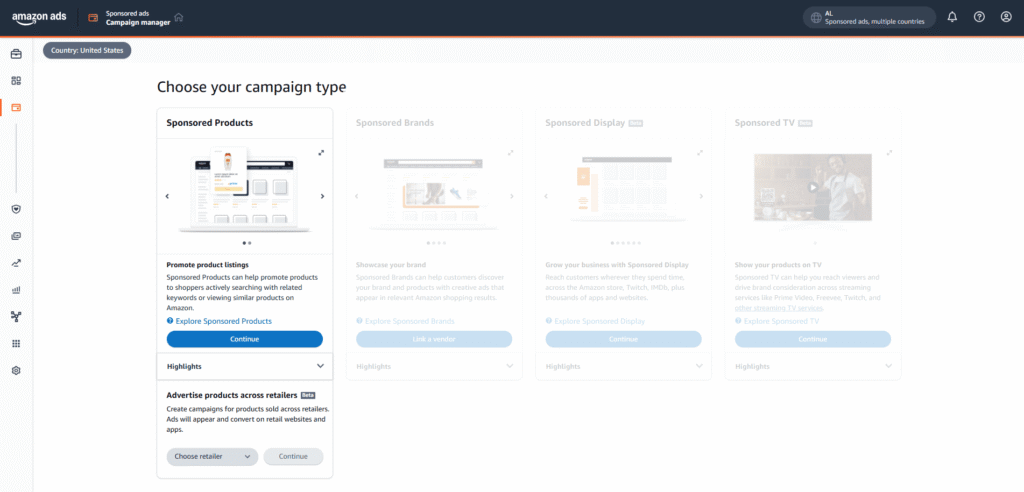
When planning your Amazon advertising strategies, Sponsored Product Ads should be a top priority because of their proven effectiveness.
- Manual Campaigns: Use data from automatic campaigns to fine-tune targeting. With manual campaigns, you have more control over keyword selection, bids, and product placements. This allows you to focus on high-converting, relevant terms.
- Automatic Campaigns: Ideal for discovering high-converting keywords and product placements. Automatically targets a wide range of relevant search terms and helps gather valuable data.
💡 Tip – Layer Negative Keywords to Improve ROAS!
Since Sponsored Product Ads often run on broad or phrase match types, they can attract a lot of irrelevant clicks. That’s where layering negative keywords becomes essential.
Negative keywords are critical for refining your Amazon advertising strategy and ensuring your ad spend is not wasted. By blocking irrelevant or low-converting search terms, you can improve your ROAS and ensure that your ads only appear in front of high-intent customers.
Regularly review and update negative keywords based on search term performance.
2. Use Sponsored Brands to Own the Shelf
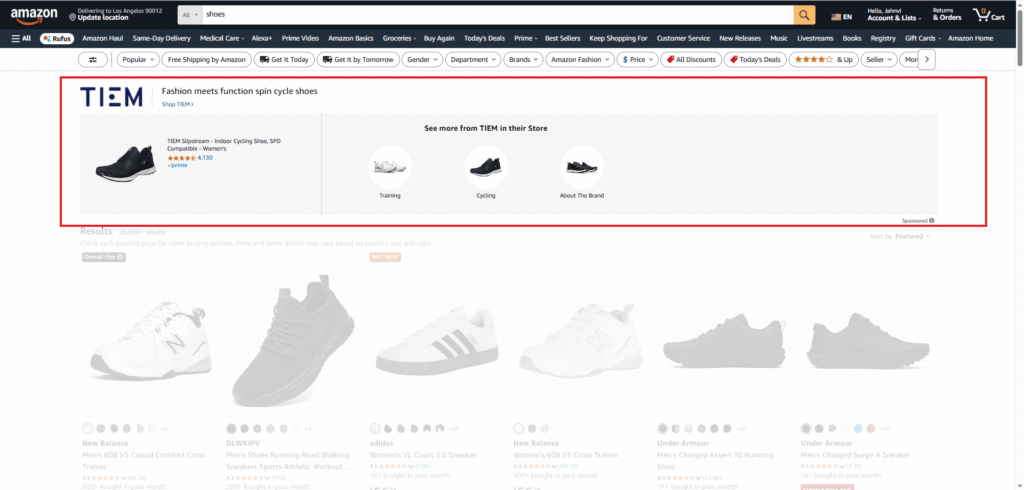
Sponsored Brands are customizable ads that feature your brand logo, a compelling headline, and a selection of products. These ads appear in prominent locations, such as the top of search results, within shopping results, and on product detail pages.
Integrating Sponsored Brands into your Amazon advertising strategies is an excellent way to increase brand visibility and drive more traffic to your storefront.
By occupying these high-visibility placements, the Sponsored Brands listing helps in:
- Increasing Brand Visibility: They capture the attention of shoppers actively searching for products, thereby enhancing brand recognition.
- Driving Traffic to Your Storefront: Sponsored Brands can direct shoppers to your Amazon Store or a custom landing page, encouraging exploration of your product range.
- Differentiating Your Brand: With rich creatives, you can tell a unique brand story that sets you apart from competitors.
To effectively leverage Sponsored Brands as part of your Amazon advertising strategies:
- Incorporate lifestyle images or videos that resonate with your target audience.
- Feature a mix of bestsellers and new products to showcase the breadth of your offerings.
- Employ a combination of keyword and product targeting to reach shoppers effectively.
- Regularly review metrics such as click-through rates and conversion rates to refine your campaigns.
With this, you can effectively “own the shelf,” ensuring that your brand remains top-of-mind for shoppers and stands out in the crowded Amazon marketplace.
3. Dominate with Sponsored Display Ads
Amazon Sponsored Display Ads aren’t just powerful on their own; they work even better when integrated into your overall marketing campaign. Like Facebook Ads and Microsoft Ads, they offer advanced targeting features but with the unique advantage of Amazon’s rich shopper data.
That makes them especially valuable for eCommerce brands looking to scale efficiently.
Already running Facebook Ads to drive traffic to your Shopify store?
Sponsored Display Ads can pick up where those leave off.
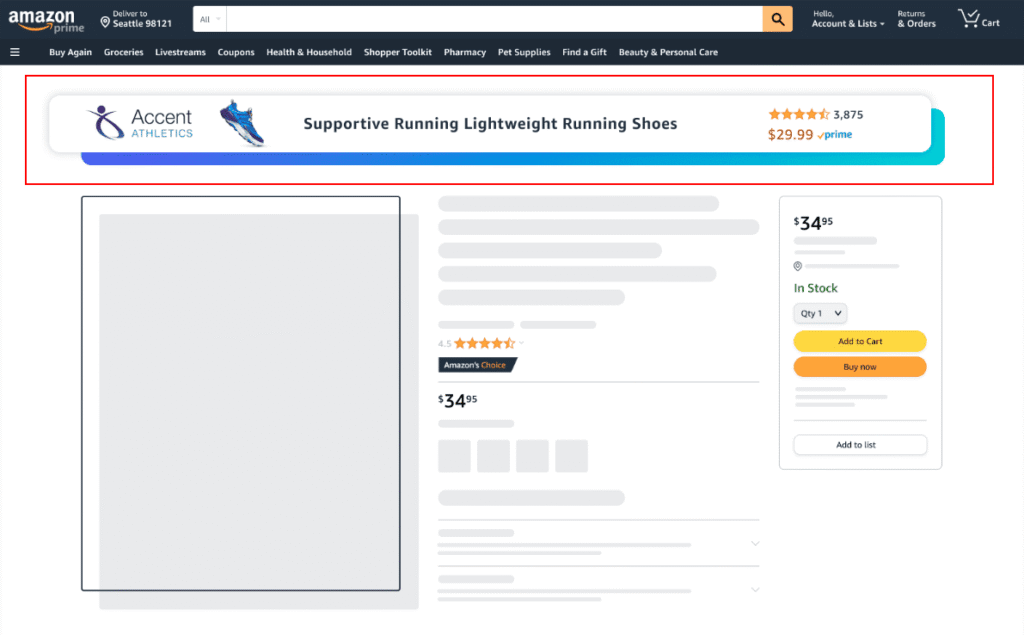
By retargeting users who clicked but didn’t buy, you stay top of mind and gently nudge them back toward conversion, no matter where they are in their buying journey.
These ads also play well with your other digital strategies, whether it’s Google Ads, Microsoft Ads, or Amazon SEO.
If you want to scale your Amazon advertising strategy, consider combining Sponsored Display with Amazon DSP for even more granular targeting.
Because Sponsored Display reaches users on and off Amazon, it helps extend your visibility beyond just one platform, resulting in a more cohesive multi-channel presence that makes your brand more discoverable across the web.
Even better, Amazon Sponsored Display Ads are ideal for boosting customer lifetime value. Use them to cross-sell complementary products or upsell higher-end options after a purchase.
Use Sponsored Display not just for retargeting visitors, but also for post-purchase campaigns to drive repeat orders and product upgrades.
It’s a smart way to build long-term relationships while increasing your average customer value over time.
Looking to go beyond Sponsored Display?
Graduating to Amazon DSP unlocks even more granular audience targeting, including lookalike audiences, lifestyle segments, and video ads shown across the broader web and apps.
For brands seeking full-funnel control and massive reach, DSP is the natural next step in your Amazon advertising strategy.
4. Combine Auto + Manual Campaigns for Smarter PPC
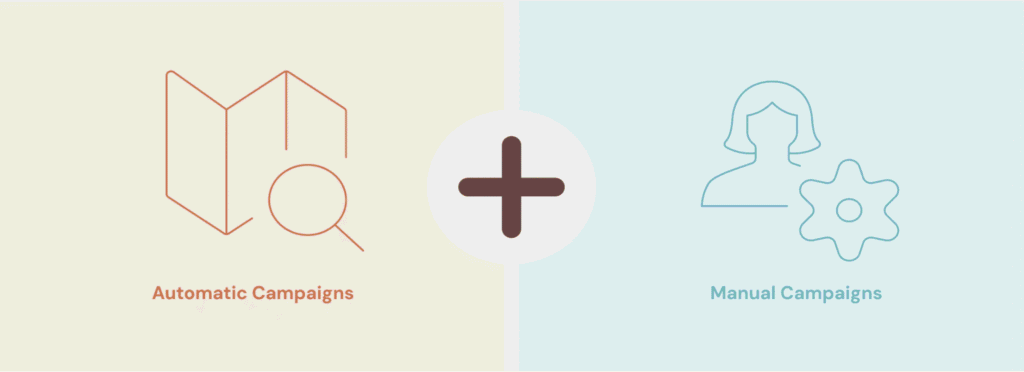
Running both automatic and manual campaigns together is one of the smartest ways to improve your Amazon pay-per-click (PPC) performance in 2025.
Many successful sellers use this approach as a core part of their Amazon advertising strategies to balance automation and control. Use automatic campaigns to let Amazon explore and find relevant keywords and ASINs for you. This works great for keyword discovery and spotting hidden opportunities.
After collecting enough data, review your search term report to find high-performing keywords, then shift those into manual campaigns where you have full control over bids and match types.
This way, your auto campaign becomes a discovery tool, while the manual campaign lets you scale up what’s already working.
Here’s how to do it:
- Launch an automatic campaign to collect data on search terms and placements.
- Analyze performance reports regularly to identify converting keywords and ASINs.
- Create manual campaigns using exact, phrase, or broad match types to fine-tune targeting.
- Keep your auto campaign running at a lower budget so it can continue discovering new opportunities in the background.
Pro Tip: As you scale, make sure both campaign types stay in sync with your stock levels and available budget.
If you are running low on inventory or entering a slow sales period, downbid or pause underperforming campaigns to prevent wasted spend.
Auto campaigns, in particular, can quickly drain your budget if not aligned with your current fulfillment status. This strategy helps you balance automation with control while staying agile and cost-efficient. It ensures you are not leaving money or visibility on the table or overspending when stock is running thin.
5. Build Keyword Funnels: Broad > Phrase > Exact
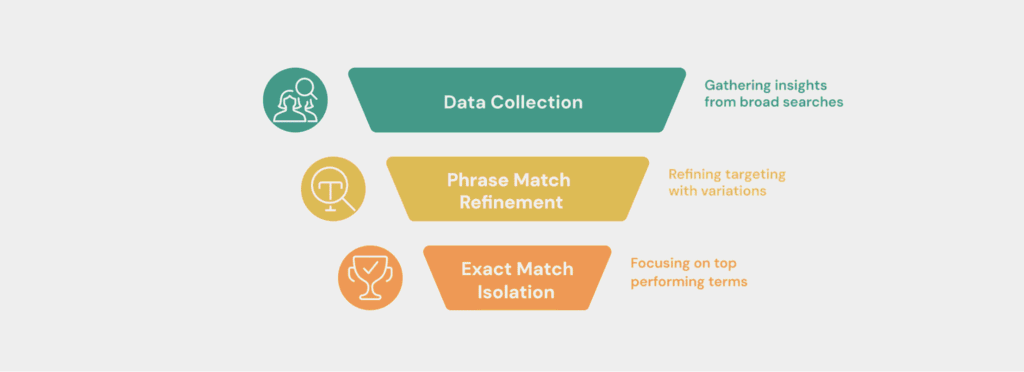
To improve efficiency and scale your campaigns over time, it’s smart to build keyword funnels using Broad, Phrase, and Exact match types—in that order.
A sophisticated Amazon advertising strategy always includes keyword funneling to optimize for both reach and precision.
Start by using broad-match keywords in a dedicated campaign to cast a wide net and gather data on different search variations.
Once you identify which search terms are converting, move those into a Phrase Match campaign to tighten targeting while still allowing for slight variations.
Finally, take your top-performing terms and isolate them in an Exact match campaign to fully control spending and bids on the most profitable keywords.
Here’s how to structure it:
- Broad Match Campaign: Discover what people are searching for, ideal for research and idea generation.
- Phrase Match Campaign: Narrow down to more relevant queries with a good balance of reach and control.
- Exact Match Campaign: Go all-in on your best keywords with the highest return potential.
This funnel approach not only helps you test and scale efficiently but also improves ACoS (Advertising Cost of Sale) over time, as you are progressively filtering out low performers and optimizing spend toward what truly works.
💡 Pro tip: Review your search term reports regularly and move converting keywords down the funnel for best results.
If you’re looking to attract customers who are already eyeing similar products, Amazon’s Sponsored Product Targeting can be a game-changer. It allows you to position your ads directly on your competitors’ listings, capturing the attention of shoppers at the exact moment they’re ready to buy.
6. Target Competitor Products to Steal the Spotlight
Targeting competitors directly in Amazon advertising strategy is a powerful way to steal their spotlight, but it’s important to approach it strategically. It’s not just about using similar keywords. Focus on true competitors, those that offer similar value propositions or solve the same problem.
Focus on Product Substitutes, Not Just Keywords
Look for products that solve the same problem as yours.
For example, instead of just targeting “earbuds,” try targeting “noise-cancelling headphones”, two products that can serve the same purpose but may attract different shoppers.
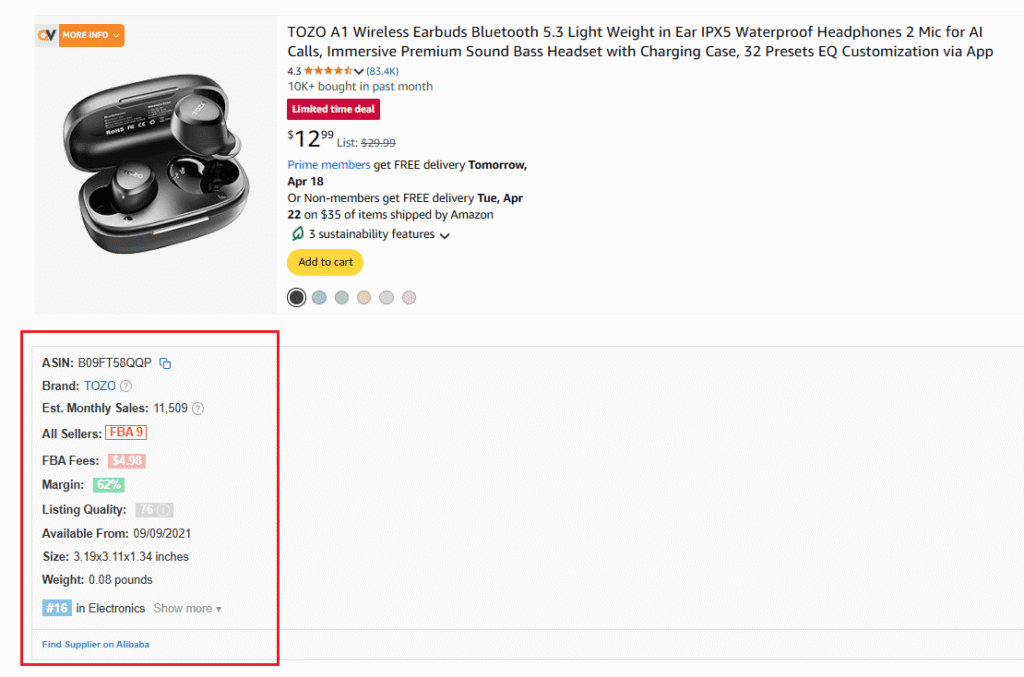
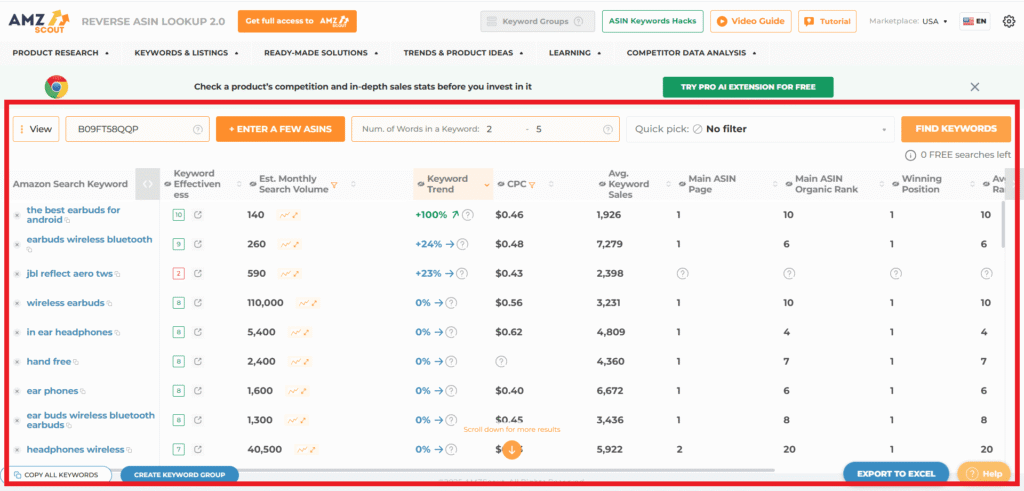
Use Reverse ASIN Tools to:
- Run reverse ASIN lookups
- Identify products frequently compared to yours in reviews
- Filter out irrelevant listings (e.g., luxury vs. budget options or items in a different price range)
Appear Where It Matters
Use Sponsored Product ASIN targeting to display your ads directly on your competitors’ product pages. This works best when:
- Your product has a clear advantage, such as a better price, more reviews, or standout features.
- You align with high-intent keywords like “top-rated,” “user-friendly,” or “long-lasting.”
Boost Conversions with Smart Offers
To increase your chances of securing the sale, consider using:
- Non-stackable coupons to preserve your margins while offering deals.
- Discounts combined with options like Subscribe & Save or Lightning Deals add extra appeal.
- Repricing tools (e.g., Channable) to intelligently adjust your pricing, such as undercutting competitors by just 5-10%.
Customer Reviews & Ratings Matter Here

When targeting competitor listings, make sure your reviews outshine theirs. A higher star rating or more positive reviews can be a deciding factor when customers are comparing options.
- By strategically combining competitive targeting with social proof, you elevate your listing’s credibility.
- By targeting the right competitor products and combining them with smart pricing tactics, you can capture shoppers’ attention directly on your competition’s page.
This method not only boosts your visibility but also drives conversions and helps you stand out from similar listings, while avoiding wasted ad spend.
7. Use Negative Keywords Like a Pro

Running Amazon ads without cleaning up your search terms is like filling a leaky bucket; you are pouring in budget but losing out on actual sales.
Negative keywords help you patch those leaks, but you’ve got to use them smartly.
Adding negative keywords is a critical component of any effective Amazon advertising strategy.
# Start with the Numbers
If a keyword has already spent around $30–$50 or received 20+ clicks without a single sale, that’s a red flag. Head to your search term report, sort by spend or ACoS, and you’ll quickly spot the culprits.
# Be Precise with Negatives
Don’t go overboard and block everything. Use exact match negatives to stop only the specific terms from draining your budget. That way, you can still show up for similar but more relevant searches. Only use the phrase match when you are sure a whole category of terms is irrelevant.
# Look for Patterns
Sometimes, it’s not just a single term but a theme. Let’s say you’re selling a “mega pint cup,” and your ads keep showing up for “insulated tumbler” or “beer mug.” If those terms aren’t converting, you might want to block them altogether, unless they are attached to keywords that still make sense, like “pirate insulated mug.”
# Clean Up, Don’t Cut Corners
Go through your search term report regularly, especially for auto and broad campaigns. It’s one of the easiest ways to lower ACoS and make your ad dollars go further. Reverse ASIN tools or even a simple spreadsheet can help you spot which terms to keep and which ones to cut. Negating keywords isn’t just about cutting costs; it’s about focusing your ads where they will bring returns.
8. Run Lightning Deals + Ads Together
Lightning Deals on Amazon are already a powerful way to drive a short-term spike in traffic and conversions. Combining Lightning Deals with targeted ads is one of the most effective Amazon advertising strategies for boosting sales velocity and organic rankings.
But if you want to supercharge their effectiveness, combining them with Sponsored Products, Sponsored Brands, or Sponsored Display is a smart Amazon advertising strategy.
It’s like giving your deal a serious boost in reach and impact.
Because when you run both together, you get
- Enhance visibility by featuring your product on high-traffic pages so that more shoppers see it.
- Accelerate sales velocity by pairing deal-driven urgency with high-intent, targeted ad traffic.
- Boost organic rankings as the sales spike improves your Best Seller Rank (BSR), increasing visibility even after the deal ends.
To make the most of this combo strategy, plan ahead:
- Schedule your ad campaigns to ramp up a day or two before the deal goes live. Increase bids and budgets to align with peak shopper interest.
- Use keywords like “Lightning Deal,” “Amazon deal,” “limited-time offer,” and “discount” alongside your regular product keywords to catch promotion-driven traffic.
- Ensure your listing is mobile-friendly and highlights Prime shipping eligibility, as most deal shoppers are browsing on mobile, and many are Prime members.
- Make sure you have enough inventory to meet the demand and avoid selling out in the middle of your deal.
You can do this by…
- Using Sponsored Products to drive high-converting, direct traffic to your deal.
- Layering in Sponsored Brands or Sponsored Display to expand reach and retarget interested shoppers.
- Adding urgency to ad copy with phrases like “Limited Time Only” or “Extra Savings Today.”
- Monitoring key metrics like ACoS, CTR, and conversion rate, and optimizing in real time.
- Keeping ads running post-deal to maintain momentum and stabilize your seller ranking or BSR.
Once the deal wraps up, don’t just switch everything off.
Keep ads running to maintain visibility, stabilize your BSR, and extend the sales boost you have just built up.
Running Lightning Deals with ads isn’t just a nice-to-have, but it’s a winning strategy when done right.
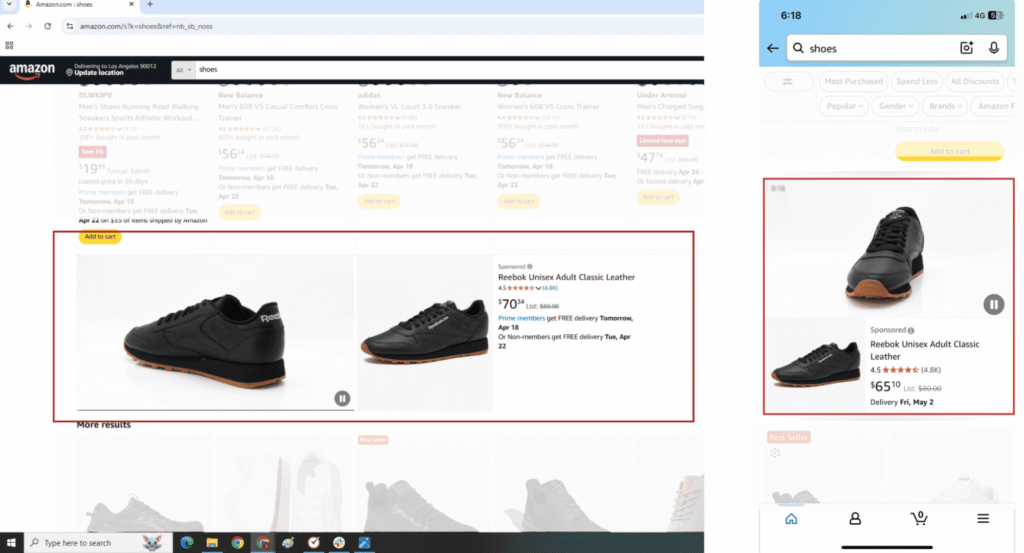
9. Optimize for Mobile Ad Placements
With nearly half of all Amazon purchases happening on mobile, you need to build your ad experience for small screens and fast thumbs.
Start with the Shopper Experience
Mobile users scroll fast and click faster. They don’t want to read walls of text or wait for slow-loading images. Your ad needs to be clear, eye-catching, and easy to act on in seconds.
Know the Difference: Mobile vs. Desktop
Before you dive into creatives, understand how mobile shoppers behave differently from desktop users. It’s not just a smaller screen but a whole different mindset:
| Feature | Amazon Desktop | Amazon Mobile |
| Layout Structure | Title, main image, bullet points, description, A+ content | Title, main image, A+ content, description, bullet points |
| Screen Size | Large – more space for visuals and text | Small – needs concise, scrollable content |
| User Behavior | In-depth browsing and reading. | Quick scanning, visual-first behavior. |
| Navigation | Spacious menus and filters | Simplified, touch-friendly layout |
| Search Behavior | Text-heavy, traditional keywords | More voice search, short-tail keywords |
| Loading Speed | Generally fast | Can lag if images or content aren’t optimized |
Mobile shoppers don’t want to work to find info. If your content doesn’t load fast or show the value upfront, they’ll scroll right past it.
Here’s how you can start doing it right.
# Use Mobile-Friendly Ad Formats
Stick with formats like Sponsored Products, Brands, and displays that naturally fit Amazon’s mobile experience.
Try banner ads for search, home, deals, detail, and checkout pages—make sure creatives follow Amazon specs (e.g., 640×100 px for banners).
# Prioritize Strong Visuals
Mobile shoppers are visual-first. Use high-resolution images that are crisp, clean, and text-free.
Your main image should stand out instantly, even on smaller screens.
# Keep Titles and Copy Short
Mobile trims text; only about 80 characters of your title might be seen. Put the key benefit first. Break info into scannable bullets to create a keyword-rich ad copy.
# Design for Responsiveness
Use mobile-responsive layouts. Keep fonts large, buttons tappable, and content easy to navigate with one hand.
Small changes here can make a huge difference in conversions.
# Use Mobile-Specific Targeting
Amazon lets you target by device, location, and behavior.
Use this to zero in on shoppers who are most likely to engage with your mobile ads.
# Add Videos and UGC
Short videos and customer-submitted images perform really well on mobile.
They quickly answer product questions and build trust without needing long descriptions.
# Track and Optimize Performance
Watch metrics like CTR, CPC, and conversion rate specifically for mobile.
Run A/B tests on creatives and tweak your bids or targeting based on real-time performance.
To help you get there faster, here are a few tips worth trying.
- ✅ Start with automatic campaigns. Use the data to refine your visuals and trim your copy.
- ✅ Focus on 2–3 high-impact placements and track performance closely.
- ✅ Experiment with device targeting, test short video creatives, and expand your mobile reach using Amazon DSP.
- ✅ Double down on what works by using analytics to guide your next steps.
- ✅ Pair Lightning Deals with seasonal campaigns like Prime Day or Black Friday to double the visibility. Time-limited deals + high buyer intent = massive ROI.
10. Embrace Amazon’s New AI-Ad Features
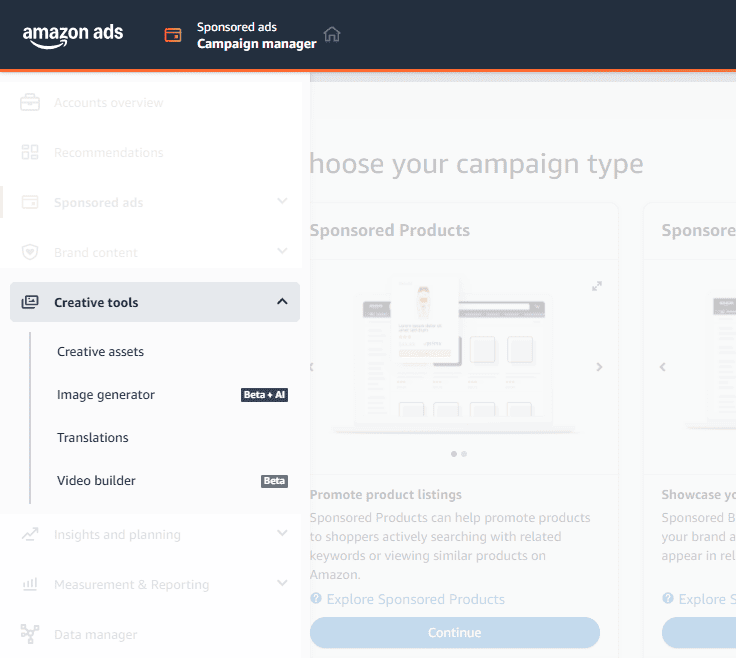
Amazon has launched a suite of AI-powered tools that simplify ad creation, making it easier for both beginners and seasoned advertisers to produce high-quality content.
These AI tools make ad creation easier than ever. Next, let’s explore Amazon’s AI Creative Studio to simplify the process of generating dynamic ads.
# AI Creative Studio
This tool lets you generate and refine image and video ads using a single product image. It’s designed to streamline the creative process and is user-friendly for all skill levels.
# Video Generator
Create engaging video content from just one product image. These AI-generated videos can be used in Sponsored Brands campaigns, making it easy to showcase your product’s features.
# Audio Generator
This tool enables the quick production of 30-second audio ads by submitting an ASIN. It’s perfect for reaching customers via Amazon Music or Alexa.
# Brand+
AI-powered Brand+ helps optimize video ads on platforms like streaming TV by analyzing browsing and shopping signals. It’s ideal for enhancing brand awareness.
These tools enable efficient campaign scaling and customer engagement, helping advertisers connect with their audience more effectively.
11. Use Video Ads in Search
Alt: Highly Visible Amazon Sponsored Brands Video Ad
Amazon’s Sponsored Brands video ads appear at the top of search results, making them highly visible to shoppers. These dynamic ads help engage in showcasing your product’s features, leading to up to a 70% increase in product detail page views and higher conversion rates compared to regular display ads.
Getting Started
- Use Amazon’s AI Video Generator to create professional videos by uploading product images and descriptions. The AI will add animations, transitions, and music, and you can preview and edit before launching.
- Aim for 15–30-second videos. Highlight your product’s key benefits and ensure the text is large enough to read easily on mobile devices. Don’t forget to include captions for sound-off viewing!
- Focus on keywords that match what shoppers are already searching for to make sure your video reaches the right audience.
Advanced Tactics
- Use Amazon’s targeting options to reach specific demographics, interests, or locations. You can even retarget shoppers who have previously viewed your listings.
- Experiment with different video versions to see what works best, like trying out new music or calls to action.
- Track performance using Amazon’s tools to see what’s working, like click-through rates and video completion rates, and adjust accordingly.
Quick Tips
- Show how your product solves a problem to make your video memorable.
- Add customer testimonials or unboxing videos for authenticity.
With video ads in Amazon search, you can boost your visibility, engage shoppers, and drive more sales in a simple, effective way.
12. Test A+ Content and Storefront Traffic Ads
Amazon’s “Manage Your Experiments” tool makes it easy to run A/B tests on your A+ Content (also known as Enhanced Brand Content).
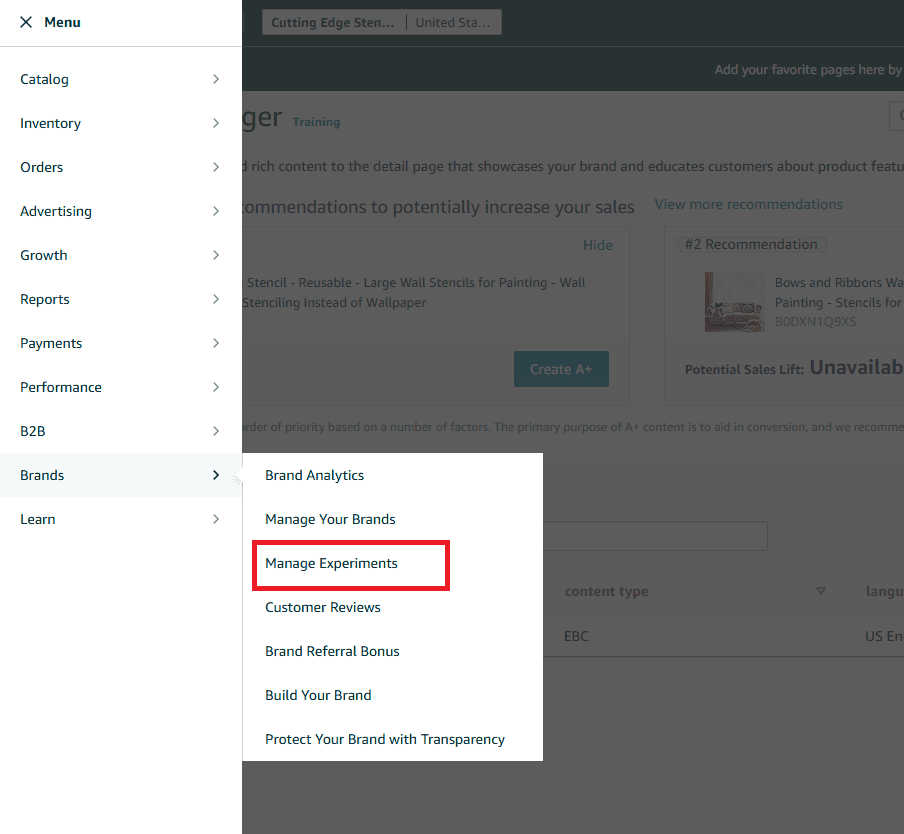
With this tool, you can create two different versions of your product images, titles, bullet points, or descriptions to see which one drives more conversions.
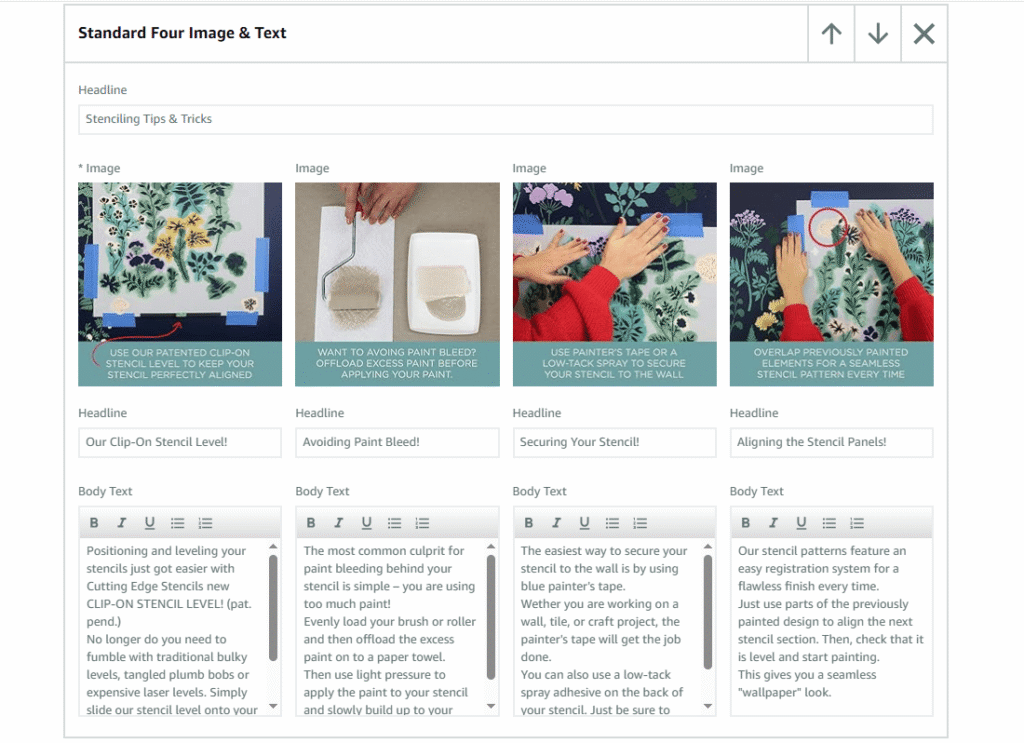
The clear dashboards show you exactly what resonates with your customers, so you can make data-driven decisions without months of guesswork.
To use this tool, make sure your brand is registered and your ASINs have published A+ Content with decent traffic.
Regularly testing and updating your A+ Content keeps your listings fresh, relevant, and optimized for both search and sales.
Experiment with different layouts, images, and messaging to find out what works best for your audience.
Once you have optimized your A+ Content, it’s time to drive more shoppers to your Storefront and build your brand presence.
Drive More Shoppers to Your Amazon Storefront with Ads
Your Amazon Storefront is your brand’s home base, showcasing your full product lineup and telling your story.
Sponsored Brands ads are a great way to direct shoppers straight to your Storefront.
These ads appear at the top of search results and can feature your logo, a custom headline, and multiple products, creating a seamless brand experience.
Sending traffic to your Storefront is especially effective for building brand awareness and encouraging cross-selling.
Shoppers are more likely to browse and discover additional products when they visit your Storefront.
When you combine well-optimized A+ Content with targeted Storefront ads, you’re setting the stage for greater visibility and higher conversions.
To get the most out of your Storefront ads:
- Use eye-catching creatives that reflect your brand.
- Target relevant keywords to reach the right audience.
- Optimize your Storefront layout and content to keep shoppers engaged.
By combining A/B testing for A+ Content with well-targeted ads driving traffic to your Storefront, you can improve your Amazon presence, boost conversions, and maximize your advertising ROI.
13. Monitor & Optimize Weekly
In 2025, Amazon’s advertising strategies are evolving rapidly, and monthly tweaks just won’t cut it. You need to stay ahead of the competition with weekly optimization. Here’s what to do:
Weekly Optimization Steps:
- Review Campaign Structure: Keep campaigns focused and organized by match type.
- Analyze Metrics: Track key metrics like ACOS, ROAS, CTR, and conversions to spot winners and losers.
- Adjust Bids & Budgets: Increase bids on top-performing keywords, lower or pause poor performers, and shift budgets accordingly.
- Add & Negate Keywords: Harvest high-converting terms and block irrelevant ones.
- Test Creatives & Placements: Rotate ads and experiment with different placements for better engagement.
- Use Automation: Make use of AI tools for real-time adjustments, but review weekly for optimization.
- Stay Updated: Keep an eye on Amazon’s new features and trends, adapting quickly.
Weekly vs. Monthly Optimization
| Aspect | Weekly | Monthly |
| Responsiveness | Fast, proactive | Slow, reactive |
| Data Freshness | Current | Outdated |
| Budget Control | Tight, efficient | Risk of waste |
| Competitiveness | Ahead of the competition | Behind fast movers |
To enhance your Amazon advertising strategy even further, consider dayparting and bid automation as tools to take your optimization efforts to the next level.
Here’s how you can make them work together for maximum impact:
Dayparting / Bid Automation:
Both dayparting and bid automation strategies work best with frequent monitoring.
Weekly check-ins are essential to ensure the algorithms are performing as expected without overspending.
How to combine?
- Use bid automation tools to adjust bids based on performance, but review weekly to ensure that bid adjustments align with your inventory and overall strategy.
- Dayparting allows you to optimize your ad spend by adjusting bids based on time of day.
- Keep an eye on conversion rates and adjust dayparting schedules weekly to maximize your spend during peak hours.
These strategies not only help you stay competitive but also ensure your budget is efficiently allocated and your ad spend remains optimized, avoiding wastage.
💡 Pro Tip:
- Use Video Ads for Better Engagement, as they get higher CTR and engagement rates, making them ideal for daily testing. Rotate video creatives weekly to keep your content fresh.
- Take advantage of Advanced Analytics to dive deep into performance data and use analytics tools to refine your approach.
- While automation tools manage bids and budgets in real-time, it’s crucial to maintain weekly manual oversight to prevent overreliance on automation and ensure optimal performance.
By optimizing weekly, you will always be ahead of the game, making timely adjustments to stay competitive while maximizing ROI.
14. Sync Your Ad Budget with Inventory Levels
One often-overlooked Amazon advertising strategy is making sure your ad spend aligns with your inventory. It sounds simple, but failing to do this can lead to wasted budget, missed sales, or poor customer experience.
Why It Matters?
If you’re low on stock, aggressive ad campaigns can drive traffic you can’t fulfill, hurting your rankings and reputation. If you’re overstocked but not advertising enough, you are missing easy revenue.
Syncing your budget with inventory ensures you’re spending wisely based on what’s actually available to sell.
How to Do It Right?
- Use Amazon Seller Central or inventory management tools to monitor stock levels closely.
- Scale ad spend up when you’re fully stocked and scale down when inventory is low.
- Let Amazon adjust bids based on stock availability: lower for low-stock items, higher for in-stock ones.
- Set up rules to pause or reduce bids when inventory drops below a certain threshold.
The Benefits
- No wasted spend on out-of-stock items
- Better ROI by focusing ads on ready-to-ship products
- Fewer unhappy customers and lost sales from unavailable items
Example:
Say you are nearly out of a bestseller. Instead of continuing to spend heavily, pause those ads and push traffic toward similar items with more inventory.
This keeps conversions flowing without burning through your budget.
# Bonus Tip – Use Amazon Attribution to Measure External Traffic
If you are driving traffic from outside Amazon, like Google Ads, Meta, influencers, or email campaigns, Amazon Attribution helps you track how those efforts perform inside Amazon.
Why It’s Valuable
Without attribution, you’re flying blind. Amazon Attribution lets you see which external channels actually lead to clicks, conversions, and sales on your listings.
How to Use It?
- Set up Amazon Attribution tags for each external traffic source (like YouTube, Facebook, or blogs).
- Track performance metrics such as clicks, detail page views, and purchases.
- Optimize your off-Amazon campaigns based on real conversion data inside Amazon.
This will help you know exactly where your external traffic is converting, so you can double down on what’s working and cut what’s not.
Example:
Running Google Ads to promote your Amazon listing? Add an Attribution tag to measure how many of those clicks turn into actual sales.
By tracking your off-Amazon efforts, you can make smarter marketing decisions and turn external traffic into measurable growth on Amazon.
Conclusion
Succeeding with Amazon advertising strategies involves far more than tossing in a few keywords or setting a fixed budget. True performance comes from sharpening your strategy, bit by bit.
Think of it as a chain reaction that offers better listings, smarter targeting, and relentless testing.
Every tweak has the potential to drive compounding results.
As Amazon’s ad platform becomes more sophisticated, it’s giving more power back to sellers.
Whether you are exploring Sponsored Products, experimenting with Sponsored Brands, or taking the plunge with DSP, there’s room to scale, regardless of your niche or size.
Let’s not forget, your competitors are already bidding for the same shoppers.
Acting today with targeted campaigns could be the difference between being seen and being overlooked.
Improved visibility, boosted conversions, and a stronger brand presence all start with the right move.
When you tap into the right Amazon services, it gets easier to stay ahead of the competition and keep your brand growing steadily.
So, if you are serious about scaling, start by refining just one campaign. Test, measure, adjust, then repeat.
Looking for an Amazon Advertising Agency to scale smarter and get more from your Amazon pay-per-click spend?
Aureate Labs experts can help you with Amazon Account Management.
Let’s talk and grow your Amazon business together!
Take action now. The best time to optimize your Amazon Ads was yesterday; the next best time is right now!
Source:






Post a Comment
Got a question? Have a feedback? Please feel free to leave your ideas, opinions, and questions in the comments section of our post! ❤️