

Native Ads Vs. Display Ads – What Fits Your Business Needs?

If you’ve explored the concepts of native ads and display ads, you know that they vary.
However, it is confusing, as you need to decide whether native ads or display ads would fit your business needs. Each format has its strengths, and understanding when, where, and how to use them can decide the success of your campaign.
Whether your goal is to optimize for engagement, visibility, or ROI, knowing the differences and strategic use cases will help you build smarter and more effective ad strategies.
Let’s get into the details.
What are Native Ads?
Native ads are a form of digital advertising that matches the look, feel, and content experience of the platform they appear on.
Native ads are designed in a way that they look like part of the editorial flow where they offer a more organic and user-friendly experience. Rather than interrupting the user experience, native ads integrate seamlessly into content. The core benefit of native ads is that they feel less intrusive while still promoting a brand or a product.
This makes it ideal for driving engagement and building trust with the audience.
Key Characteristics of Native Ads
Native ads are defined more by their visual alignment with the platform.
Here are some key traits of native ads.
- Non-disruptive Appearance: Native ads adopt the layout, typography, and tone of the surrounding content, making them feel like a natural part of the user experience.
- Value-driven: These ads aim to inform, entertain, or educate rather than hard-sell, aligning more closely with editorial content.
- Contextual Relevance: They appear in content-rich environments where users are already engaged and open to discovering more.
- Higher Engagement Potential: Native ads tend to have better click-through and engagement rates because they don’t feel intrusive.
What are Display Ads?
Display ads are a form of online advertising that typically appears in designated ad spaces on websites, apps, or social media platforms.
These are highly visual ads, often in the form of banners or side panels, that aim to attract attention and drive action through graphics, animation, or interactive elements. Unlike native ads, display ads are clearly marked as promotional and don’t try to match the look and feel of editorial content.
Key Characteristics of Traditional Display Ads
Traditional display ads are mostly about standing out on the interface of their featured platform to grab user attention.
Here are some key traits of display ads.
- Visually Distinct: Display ads are intentionally designed to stand out from surrounding content using bold visuals or animations.
- Standardized Sizes: They follow fixed dimensions as defined by the IAB (Interactive Advertising Bureau).
- Clear Call-to-Action (CTA): These ads typically include a prominent CTA to encourage clicks.
- Awareness & Retargeting: Often used for both brand visibility and remarketing to previous site visitors.
- Widely Used Across Platforms: Common on news sites, blogs, forums, and mobile apps.
Now, let’s move further into discussing the key differences between native ads and traditional display ads.
The Key Differences Between Native Ads and Traditional Display Ads
Native ads and display ads differ fundamentally in how they present themselves and engage users.
Native ads are designed to appear as part of the platform’s natural content flow, often looking like articles, listings, or recommendations. They aim to provide value while promoting, leading to higher user trust and engagement. Display ads, on the other hand, are more traditional banner-style visuals that stand apart from content.
They’re great for broad visibility and remarketing, but users may ignore them due to ad fatigue. Choosing between the two depends on your goals. You either want to spread awareness or seek engagement.
Here’s a clean comparison table format summarizing the key differences between Native Ads and Display Ads:
| Aspect | Native Ads | Display Ads |
| Appearance and Format | Matches the platform’s content and design; appears as articles, listings, etc. | Uses standard ad sizes; clearly separate from editorial content Appears as banners, sidebars |
| User Engagement | Higher engagement due to contextual placement and content relevance | Lower engagement; often ignored unless visually compelling |
| Performance Metrics | Measured by interactions, scroll depth, and time spent on content | Focused on impressions, CTR, and conversions |
| Ad Fatigue / Blindness | Less prone to fatigue due to native integration | More susceptible to banner blindness |
| Trust & Credibility | Perceived as more trustworthy, especially on reputable platforms | Often seen as intrusive or overly promotional |
| Targeting Capabilities | Advanced contextual, interest-based, and behavioral targeting | Strong demographic, geo, and device-level targeting |
Next, let’s check the types of formats and styles for native ads and display ads.
Native Ads & Display Ad Formats – Types & Styles (With Examples)
Before you choose the right ad format for your campaign, it’s important to understand how native and display ads actually appear across platforms.
From in-feed placements to traditional banners, each format serves a different purpose and caters to different user behaviors. In this section, we’ll break down the most common types of native and display ads (with examples) to help you visualize how each format works and where they fit best in a marketing strategy.
What Do Native Ads Look Like?
Native ads are designed to appear as a natural part of the user’s browsing experience. Instead of standing out as obvious advertisements, they match the form and function of the platform they’re displayed on and blend in seamlessly into content feeds, recommendation widgets, or search results.
Here are the most common styles of native ads you’ll come across.
# In-Feed Native Ads
These ads show up within content feeds on news sites, blogs, or social media. They mimic the surrounding posts in terms of format, font, and tone, making them feel like regular updates or stories rather than ads.
Here’s an example of an in-feed native ad on social media platforms.

# Content Recommendations
Content recommendations, a type of native ad, integrate promotional content into a user’s online experience. Content recommendations typically appear as suggested articles, products, or services that are relevant to the user’s interests or the content they are currently viewing. They can be found in various places, including:
- At the end of articles or blog posts
- Within editorial content
- Widgets and sidebars
Let’s understand these formats with examples.
1. End of Articles or Blog Posts
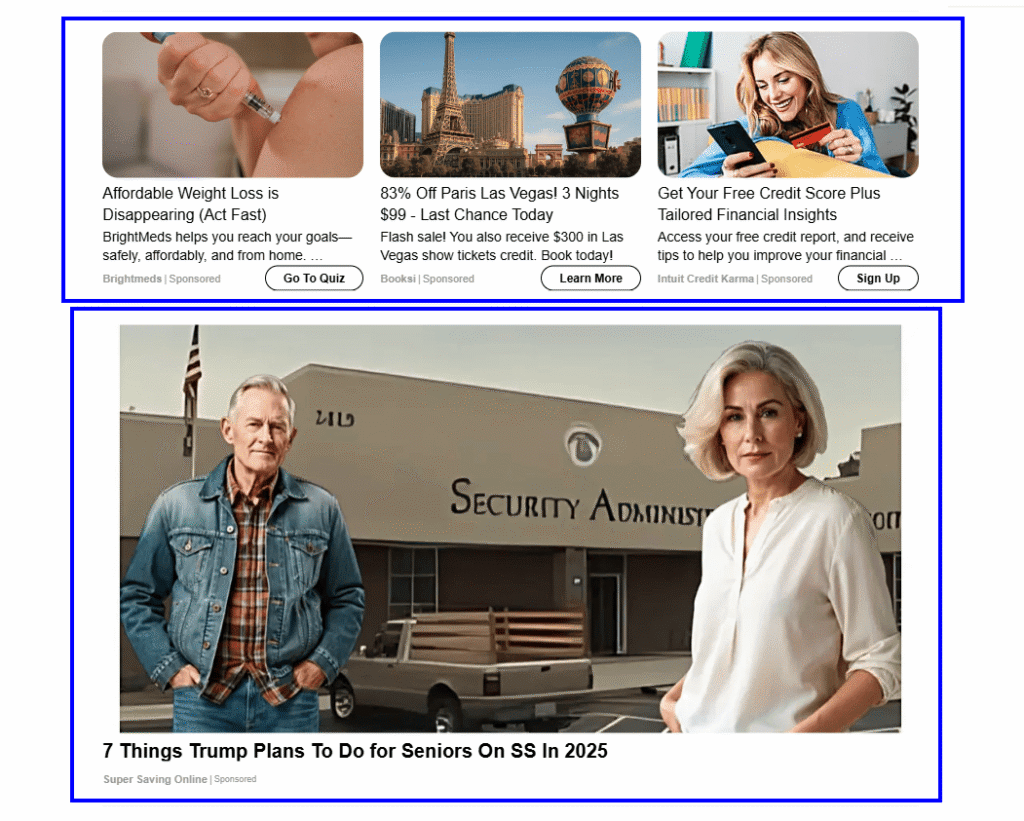
One of the most popular placements for content recommendation ads is at the end of articles or blog posts. This positioning is effective because:
- It provides a natural next step for users who have finished reading an article.
- Users are in a “discovery mode” and more likely to engage with suggested content.
- It doesn’t interrupt the reading experience but offers additional value.
2. Within Editorial Content
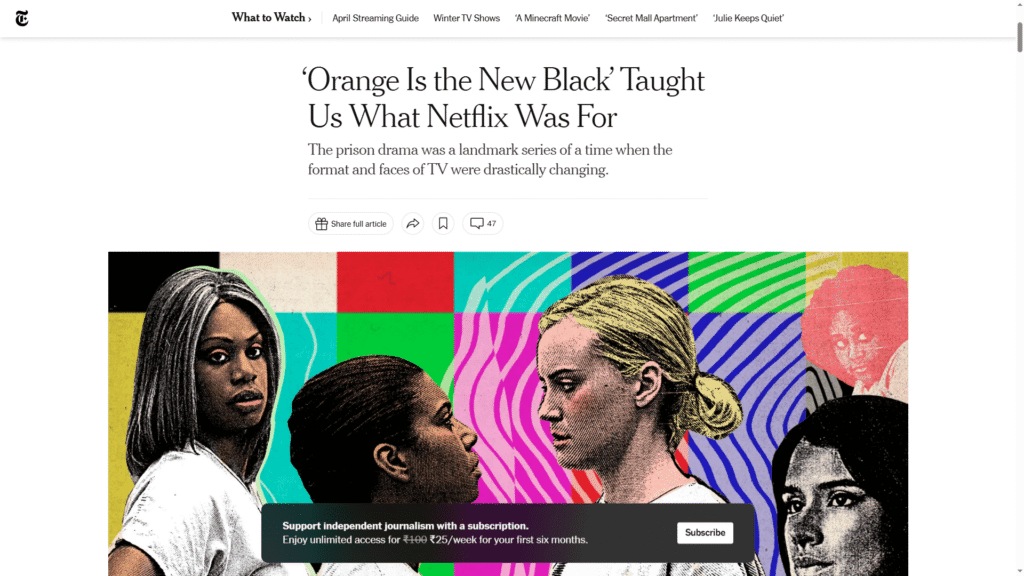
Content recommendations can also be integrated directly into the body of an article or blog post.
These in-content placements:
- Appear between paragraphs or at logical breaks in the content.
- Create a seamless reading experience while introducing relevant recommendations.
- Can include various formats such as text, images, or video content.
- Or can be entirely about the content.
3. Widgets and Sidebars
Many websites utilize widgets or sidebars to display content recommendations. While sponsored, they are presented as helpful links to keep users engaged with more relevant content. These are often labeled with phrases like:
- “Recommended for You”
- “You May Also Like”
- “Suggested Content”
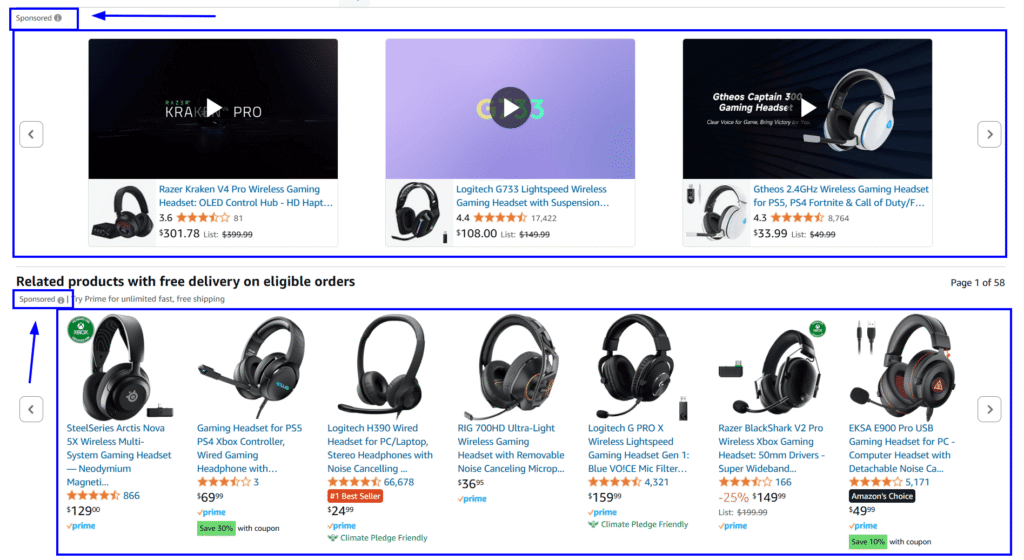
Here’s an example from Amazon.
# Sponsored Listings
Common in eCommerce and search engines, these mimic organic product listings or search results.
For example, a promoted product on an online store might look like a regular item but is marked as “sponsored.” Here’s an example from Amazon.

What Do Display Ads Look Like?
There are multiple types of display ads, ranging from broad categories like contextual and mobile ads to specific ones like pop-up and infographic ads. Each type can be of a specific format.
Here are the most common styles of display ads you’ll come across.
# Banner Ads
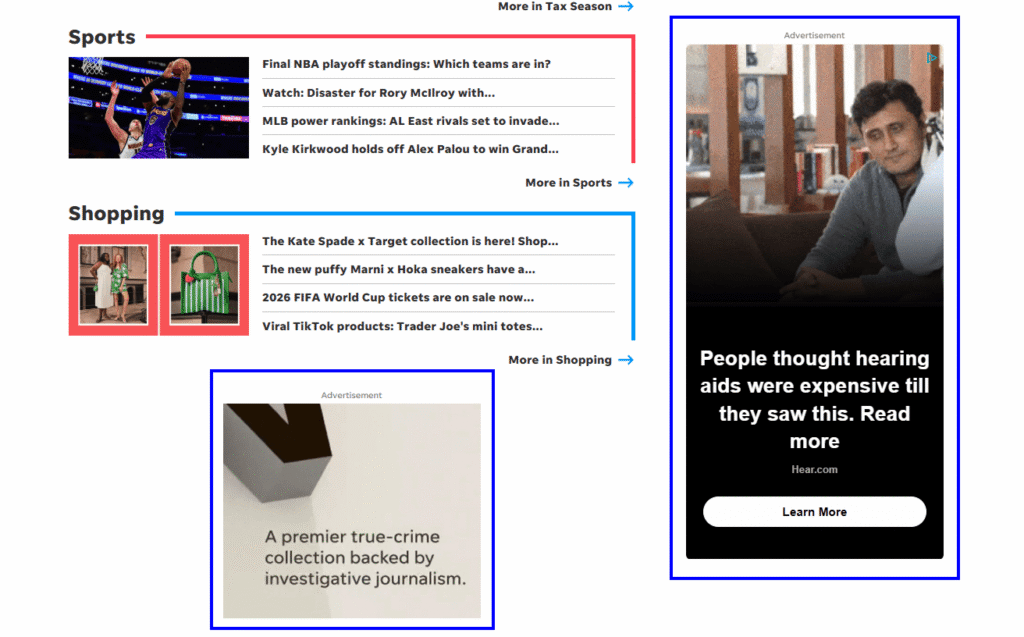
Banner ads are static or animated rectangular ads displayed prominently on web pages.
They often feature eye-catching visuals, concise text, and a clear call-to-action (CTA). You can often spot them at the top (leaderboards), sides (skyscrapers), or bottom of web pages on news sites, blogs, and eCommerce platforms.
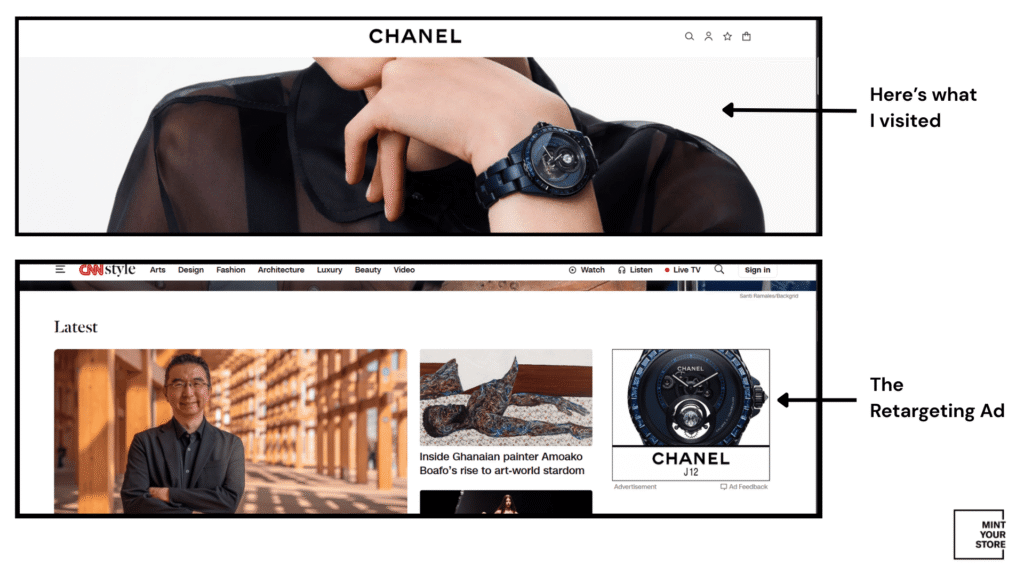
# Retargeting Display Ads
Second type of display ads are where brands retarget their past visitors or customers. They use cookies and pixels to remind users about products or services they showed interest in.
These ads are displayed across third-party websites, social media platforms, or search engines like Google and Bing to re-engage with potential customers.
Here’s an example of recently visited content and how the brand is retargeting through third-party websites.
# Moving / Video Display Ads
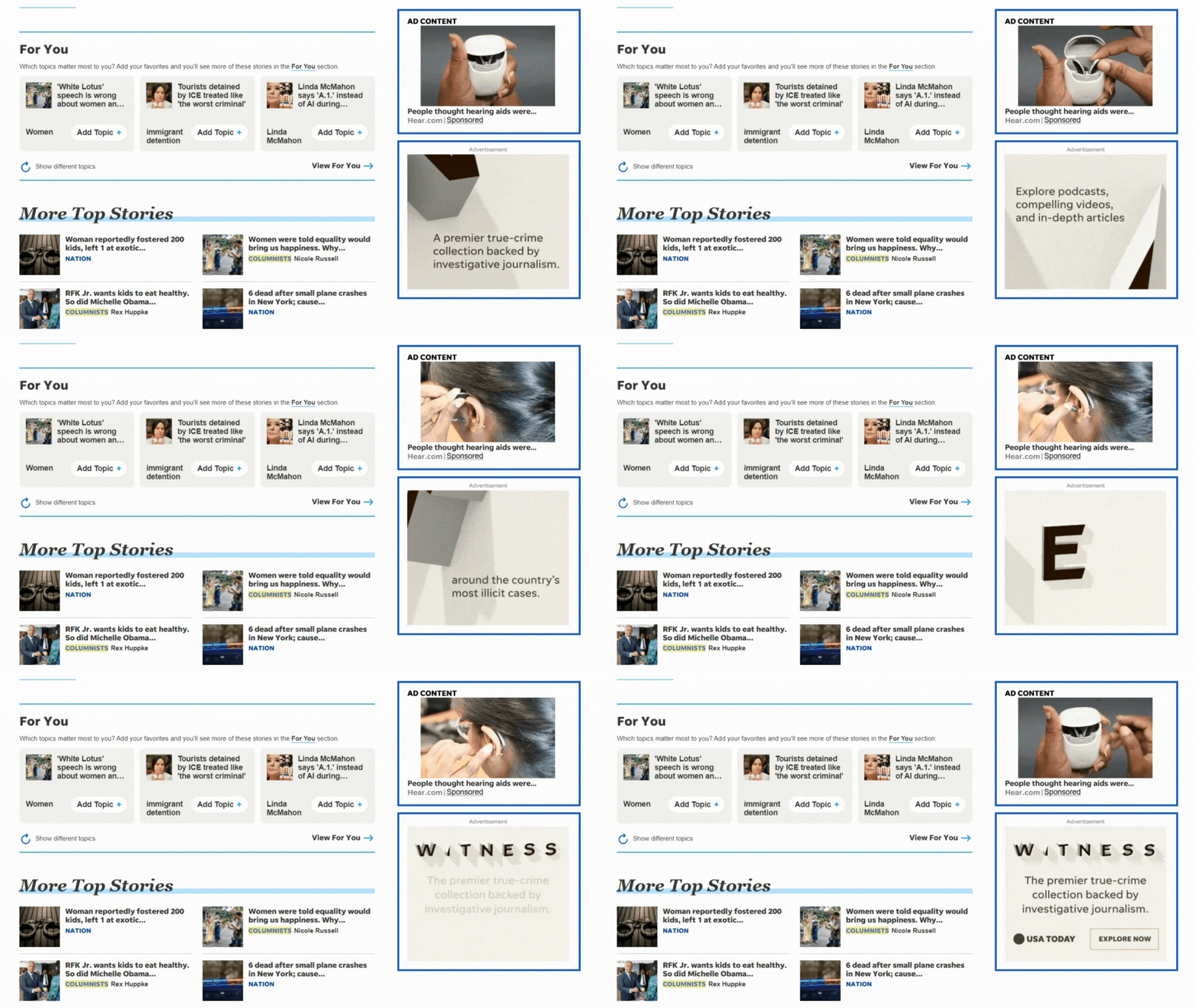
Dynamic ads incorporate video content to engage users more effectively.
These can include product demonstrations or storytelling. Often embedded within articles, social media feeds, or as pre-roll ads on video platforms like YouTube. Here’s an example of a video display ad embedded in the sidebar of articles.
# Interactive Ads
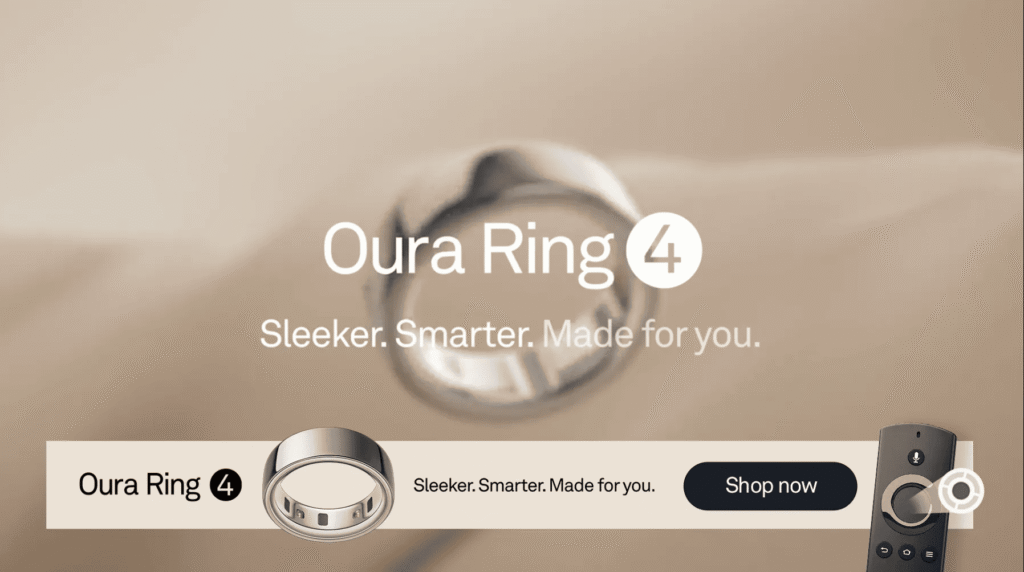
Interactive ads are those that encourage user interaction with quizzes, clickable elements, or games.
They are designed to boost engagement and create memorable experiences. You can easily find such ads on websites, mobile apps, or social media platforms where user interaction is high.
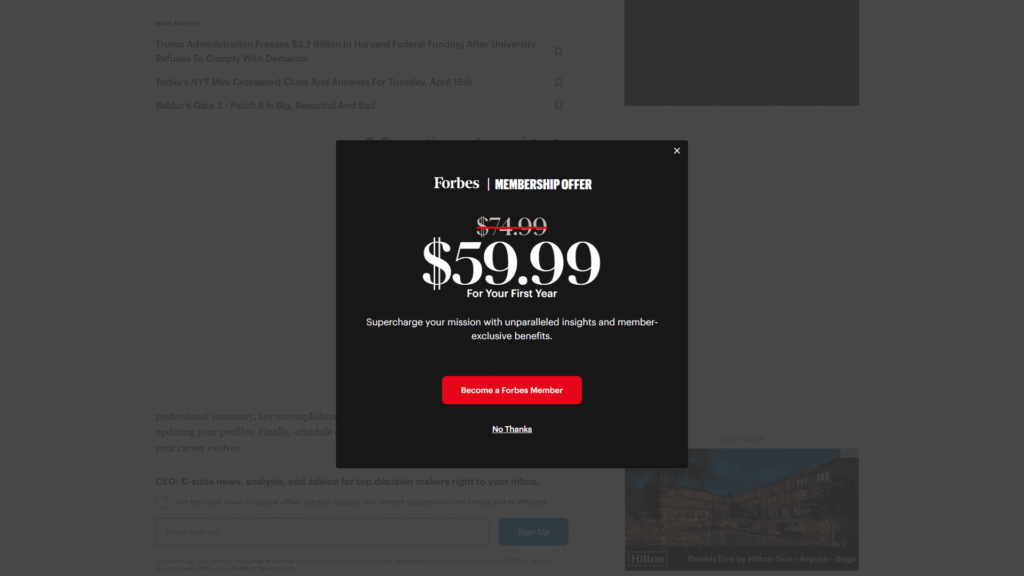
# Pop-up or Floating Ads
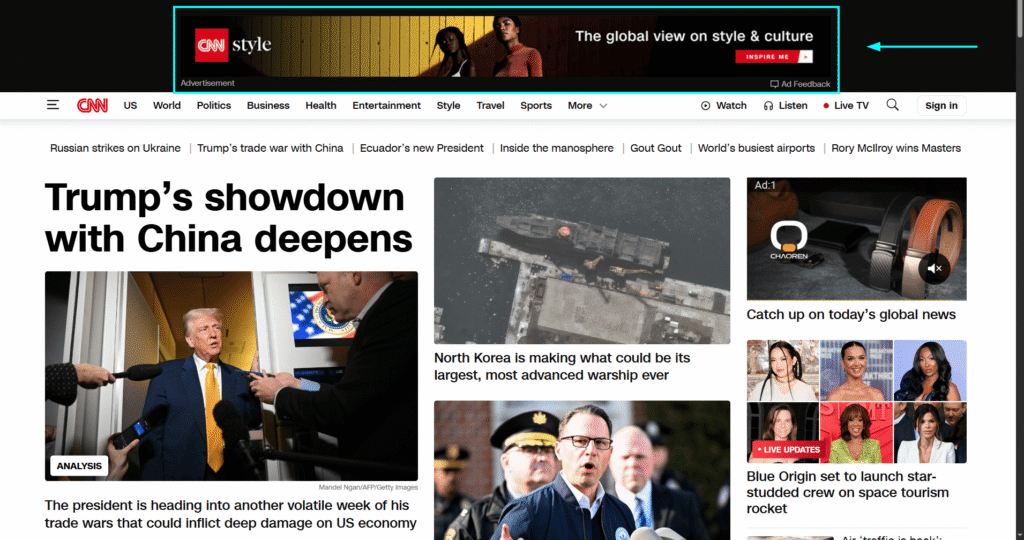
Ads that appear dynamically over the content of a webpage.
They are often used for promotions, lead generation, or announcements and are typically triggered by user actions (e.g., scrolling) and appear in the center of the screen or as floating elements.
Here’s the floating ad example from CNN.
Here’s the pop-up ad example.
;
That’s all about ad formats for native ads and display ads. Hope it helped you understand how each format serves different marketing goals and is strategically placed to maximize visibility and user engagement.
Now, let’s check when native ads and display ads can be used.
Native Ads Vs. Display Ads – When to Use
You know what native ads and display ads are, and now it’s your time to figure out if native or display ads can be part of your strategy for campaign success. Let’s get answers for each possibility.
# When Should You Consider Running a Native Ads Campaign?
Native ads are ideal for campaigns that target to bring in user trust, engagement, and long-term relationships with the audience. You can consider running native ads when your campaign goals are:
1. Driving High-Quality Traffic
Native ads target contextual relevance, ensuring that the audience is genuinely interested in the content. This makes them effective for driving better-quality traffic to websites.
2. Promoting Content
If your goal is to share articles, videos, or branded content, native ads work well because they appear as part of the editorial flow.
3. Building Brand Awareness
Native ads are excellent for fostering brand trust and affinity over time, as they feel organic and non-disruptive.
4. Increasing Engagement
With higher click-through rates (CTR ~0.2%) than display ads (~0.05%), native ads are suitable for engaging users who might otherwise overlook traditional advertisements.
Industries That Benefit Most From Native Ads
Native ads work best in industries where content consumption is high, decision-making is emotional or research-heavy, and brand trust plays a big role. Here are some industries that benefit the most.
| Industry | Why Native Ads Work | Best Native Ad Formats | Examples |
| Health & Wellness | Customers research before buying supplements, skincare, fitness gear. | Sponsored blog posts, expert tips, product recommendation lists. | “Top 5 Natural Supplements for Energy”→Links to product pages. |
| Fashion & Apparel | Customers seek suggestions on right fashion items. | Lookbooks, styling tips, influencer collabs. | “How to Style Wide-Leg Pants This Summer” with shoppable links. |
| Beauty & Skincare | Buyers seek reviews, tutorials, and routines before purchases. | Tutorials, before-and-after stories, quizzes. | “What’s the Best Night Cream for Dry Skin?”→Leads to a product quiz. |
| Home Decor & Furnishing | Visual storytelling influences purchases. | Home makeover blogs, visual guides, trend stories. | “5 Small Living Room Hacks That Actually Work”→Links to furniture pieces. |
| Consumer Electronics | Shoppers compare specs, read reviews, and need confidence in product quality. | Product comparisons, explainer articles, use-case demos. | “Best Budget Laptops for Students in 2025”→Direct product links. |
| Food & Beverage (DTC) | Customers seek suggestions on the right items. | Recipes, lifestyle stories, influencer taste tests. | “Healthy 5-Minute Snacks”→Featuring the brand’s protein bars or shakes. |
| Pet Products | Emotional buying and loyal followings make storytelling powerful. | Pet care tips, breed-specific guides, vet-approved lists. | “Must-Have Toys for Active Dogs”→Shoppable content for pet eCommerce. |
| Sustainable Products | Storytelling and values-based buying drive clicks and loyalty. | Brand stories, behind-the-scenes, cause-driven content. | “How This Brand Makes Plastic-Free Laundry Detergent”→CTA to the product page. |
# When Should You Consider Running a Display Ads Campaign?
Display ads are best suited for campaigns when your goal is to gain immediate visibility and quick conversions. They stand out distinctly from the surrounding content and can be highly targeted.
You can consider running display ads when your campaign goals include:
1. Driving Broad Reach
Display ads are effective for reaching large audiences quickly, making them ideal for brand awareness campaigns.
2. Launching Promotions or Time-Sensitive Campaigns
Their directness helps capture attention swiftly, which is crucial for product launches or limited-time offers.
3. Retargeting Audiences
Display ads excel in remarketing campaigns by re-engaging users who have interacted with your website or products.
4. Tracking Immediate ROI
With measurable performance metrics like impressions and conversions, display ads provide real-time insights into campaign effectiveness.
Industries That Benefit Most From Display Ads
Display ads work best in industries where visual appeal drives attention, impulse buying is common, and repeat exposure increases conversions. They thrive when consumers are influenced by visuals, urgency, and brand familiarity.
Here are some industries that benefit the most.
| Industry | Why Display Ads Work | Best Display Ad Strategies | Examples |
| Fashion & Apparel | Fashion triggers impulse buying and FOMO; vibrant visuals instantly grab attention. | Dynamic product retargeting, seasonal collection promos. | Banner: “New Summer Styles Just Dropped”→Carousel of products. |
| Consumer Electronics | Buyers often research heavily, so repeated exposure builds familiarity and trust. | Spec-driven banners, time-limited offers, cart reminders. | “Your Wishlist Laptop Is Back in Stock!”→Personalized product ad. |
| Beauty & Skincare | Products are visual and aspirational, before-after visuals and brand presence drive interest. | Product spotlight banners, free shipping promo, retargeting abandoned carts. | “Still Thinking About That Serum?”→Direct ad to product page. |
| Home & Furniture | High-involvement category; visual setups help imagine the product in their life. | Contextual display ads, showroom-style product layouts. | “Complete Your Living Room Look”→Display ad with room setup imagery. |
| Health & Fitness | Taps into personal goals (e.g. weight loss, strength) and uses urgency to prompt action. | Offer-based ads, customer review highlights, UGC in banners. | “Get Fit at Home – 20% Off Yoga Gear Today Only” |
| Food & Beverage (DTC) | Often impulse-driven; visual cues and scarcity tactics trigger cravings and clicks. | Limited-time offers, geo-targeted ads, product bundle promotions. | “Hungry? Try Our New Vegan Snack Box – Free Delivery” |
| Pet Supplies | Emotional connection with pets makes people highly responsive to tailored product ads. | Retargeting pet owners, personalized offers based on pet type. | “Treats Your Pup Will Love – 15% Off for Returning Customers” |
| Toys & Kids Products | Parents respond to safety, fun, and educational value, bright, clear visuals reassure and attract. | Animated banners, event-based promos (Back to School, Holidays). | “Top STEM Toys of the Year – Shop Now Before They Sell Out” |
Overall, you can see that both of the ads can work for your business type, depending on your marketing objectives, audience preferences, and desired outcomes.
Before you make up your mind on which ad type is right for your campaign, let’s check the potential benefits and drawbacks for each.
Native Ads Vs. Display Ads – The Pros & Cons of Each Format
Here’s a detailed breakdown of Native Ads Vs. Display Ads, highlighting the pros and cons of each format, when to use them, and how they influence buyer behavior. A quick comparison table is included.
Pros & Cons for Native Ads
| Pros | Cons |
| Feels organic and less disruptive. | Slower conversion cycle, more about nurturing at first. |
| Great for education and to invoke emotional purchases. | Requires time and skill to create quality content. |
| Better performance on mobile and content platforms. | May be less effective for urgent or impulse offers. |
| Improves brand recall and storytelling. | Difficult to track immediate ROI if not paired with retargeting. |
Pros & Cons for Display Ads
| Pros | Cons |
| Strong for brand visibility and retargeting. | Often seen as disruptive or ignored (banner blindness). |
| Great for visual-first industries and impulse buys. | Lower engagement rates than native ads. |
| Easier to scale and A/B test quickly. | Can be blocked by ad blockers. |
| Ideal for promotions, flash sales, and remarketing. | Less effective for storytelling or complex messaging. |
With that, it’s time we decide on the right ad format for your upcoming ad campaign.
How to Choose the Right Format for Your Campaign?
Just as I said earlier, choosing between native and display ads depends on your campaign goal, audience behavior, product type, and buyer journey stage.
Use Native Ads when:
- You need to educate or build trust before conversion.
- Your product requires research or emotional investment (e.g., skincare, finance, education).
- You want to position yourself as a thought leader through content-driven storytelling.
- Your audience engages heavily with articles, videos, or blogs.
Use Display Ads when:
- You’re running time-sensitive offers or flash sales.
- You want to retarget cart abandoners or high-intent browsers.
- Your product has strong visual appeal (e.g., fashion, home decor, electronics).
- You’re optimizing for reach and frequency to increase brand recall.
Native + Display – Can They Work Together?
Absolutely. In fact, native ads and display ads work best together when mapped across the funnel.
Here’s how they can complement each other.
| Funnel Stage | Format | Goal |
| Top of Funnel (TOFU) | Native Ads | Build awareness through valuable content |
| Middle of Funnel (MOFU) | Native + Display | Educate + remind with content + visuals |
| Bottom of Funnel (BOFU) | Display Ads | Convert with retargeting and promotions |
Example Flow:
- A prospect reads your native ad article: “How to Choose the Right Skincare Routine for Oily Skin.”
- Later, they see a display ad: “25% Off Our Oil-Control Kit – Today Only.”
- Boom—they’re easy to convert now as you first introduced your brand and benefits.
Final Thoughts
That was all about Native Ads Vs Display Ads.
Throughout the article, you learned what they are, their tone, style, how they appear, and mostly, how they differ from each other.
Both native ads and display ads have their strengths. The key is to use them strategically.
Also, choosing the right format isn’t about picking one over the other, it’s about understanding your audience, your product, and where the buyer is in their journey. When aligned with your goals, native and display can drive awareness, engagement, and conversions in a seamless, full-funnel strategy.
Rest, our Ad Experts at Aureate Labs can help you run better native and display ad campaigns.






Post a Comment
Got a question? Have a feedback? Please feel free to leave your ideas, opinions, and questions in the comments section of our post! ❤️