

10 Best Shopify Marketing Automation Tools in 2026

Growing a Shopify store in 2026 requires more than great products. It demands consistent and personalized marketing across every touchpoint. But doing this manually is nearly impossible at scale. That’s where Shopify marketing automation tools make the difference.
Automations improve repetitive workflows, boost conversions, and deliver timely messages that feel genuinely relevant to each customer.
In this guide, we highlight the Shopify marketing automation tools proven to drive results.
These tools help store owners recover abandoned carts, personalize email flows, automate customer journeys, and engage shoppers across email, SMS, chat, and push notifications, without adding extra work to the team.
Below is a quick overview of the best-performing platforms before we dive deeper into strategies and full reviews.
Best Shopify Marketing Automation Tools in 2026
| Tool | Best for | Key Features | Starting Price | G2 Rating |
| Snov.io | Multi-channel outreach combining email automation with Shopify-oriented lead workflows | Email sequences, lead finder, verification, CRM sync | Free tier / Paid from $39/month | 4.8/5 |
| Klaviyo | Personalized email and SMS automation for Shopify | Predictive analytics, Shopify data sync, segmentation | Free tier / Paid from $20/month | 4.7/5 |
| Omnisend | Omnichannel automation for growing Shopify stores | Email, SMS, push notifications, workflow builder | Free tier / Paid from $16/month | 4.6/5 |
| ActiveCampaign | CRM-driven behavioral automation | Visual builder, lead scoring, predictive sending | From $29/month | 4.6/5 |
| Drip | Advanced eCommerce segmentation and workflows | Visual automation, behavioral triggers, playbooks | From $39/month | 4.5/5 |
| HubSpot | Unified marketing, CRM, and revenue automation | Analytics, workflows, attribution reporting | Free tier / Paid from $45/month | 4.7/5 |
| Mailchimp | Simple, beginner-friendly automations | Templates, recommendations, behavior targeting | Free tier / Paid from $13/month | 4.4/5 |
| PushOwl | Web push notification automation | Cart recovery, alerts, subscriber growth | Free tier / Paid from $19/month | 4.6/5 |
| Privy | Popups and on-site conversion automation | Exit-intent popups, SMS, welcome flows | Free tier / Paid from $30/month | 4.5/5 |
| Tidio | Conversational automation via chatbots | Chat flows, live chat, Shopify sync | Free tier / Paid from $29/month | 4.7/5 |
What Is Shopify Marketing Automation?
Shopify marketing automation is the use of software to streamline and personalize how your store communicates with customers. Instead of manually sending every email or checking every abandoned cart, you set up workflows that trigger actions based on real behavior, like viewing a product, adding to cart, buying, or going quiet.
These automations help you send the right message at the right time, boosting conversions without constant hands-on work. Beyond basic reminders, you can run personalized product recommendations, multi-channel sequences, chatbots, SMS campaigns, loyalty flows, and even predictive flows that identify who’s likely to buy again.
The goal isn’t to replace human interaction, but to support it. Automation keeps your store responsive, timely, and relevant as you scale—leading to better retention, more efficient marketing, and a shopping experience that feels tailored to each customer.
Before investing in Shopify automation tools, ensure your product pages, checkout flow, and mobile experience are optimized.

Pro Tip: Learn store optimization strategies in our guide on how to improve the conversion rate to maximize ROI from every automated message you send.
Exploring the 10 Best Shopify Marketing Automation Tools
1. Snov.io
G2 Review: ★4.8/5
Best for: Multi-channel outreach combining email automation with Shopify-oriented lead workflows.

Snov.io is an all-in-one outreach and automation platform that helps Shopify merchants connect with shoppers, partners, and leads through targeted email workflows. While many Shopify-focused tools stay within the store environment, Snov.io excels at external lead generation — ideal for brands that rely on influencer collaborations, wholesale partnerships, or B2B sales alongside their online storefront.
Its workflow builder allows users to create automated sequences triggered by customer behavior, campaign engagement, or lead qualifications. The built-in email finder and verifier tools make it easy to expand your contact list beyond Shopify, ensuring campaigns reach verified, high-quality leads. Shopify sellers who run influencer outreach, brand partnerships, or wholesale programs often managing multiple accounts for partners, regions, or campaigns. They gain a strong advantage by using Snov.io’s verification tools and multi-touch automation.
Key Features
- Email and multi-channel workflows for Shopify-related outreach
- Drip campaigns triggered by behavior, events, or CRM updates
- Email finder and verifier for building influencer and wholesale lists
- CRM integrations with HubSpot, Pipedrive, and more
- AI-powered personalization for high-response outreach
- Real-time analytics for deliverability, opens, click-throughs, and conversions
2. Klaviyo
G2 Review: ★4.7/5
Best for: Personalized email and SMS automation built specifically for Shopify.

Klaviyo is widely considered the gold standard for Shopify email and SMS automation. It integrates directly with Shopify’s backend, pulling customer behavior, purchase history, and browsing actions to create hyper-personalized campaigns. Its predictive analytics — such as expected next order date and churn likelihood — set it apart from simpler email tools.
Its automation templates simplify workflows for abandoned carts, welcome flows, win-back campaigns, browse recovery, and product recommendations. Klaviyo’s segmentation engine is one of the most advanced available, making it a strong choice for brands ready to scale personalization.
Key Features
- Deep Shopify data sync for behavior-driven targeting
- Predictive analytics for customer lifetime value and churn
- Pre-built eCommerce automation templates
- SMS and email campaigns in one dashboard
- Strong segmentation and personalization logic
- Detailed reporting tied directly to Shopify revenue
3. Omnisend
G2 Review: ★4.6/5
Best for: Omnichannel automation combining email, SMS, and web push notifications.
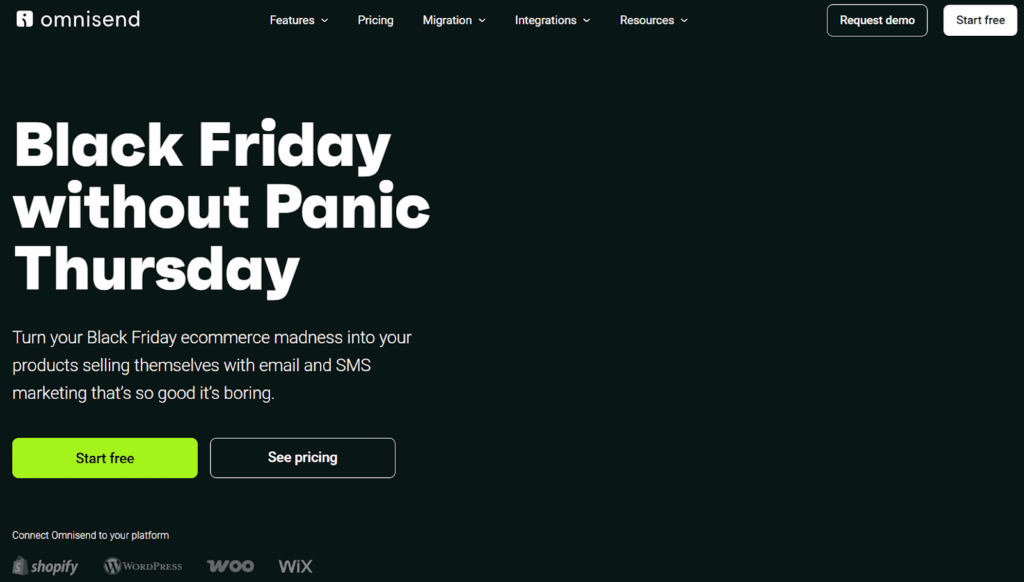
Omnisend is ideal for Shopify stores that want to create seamless customer journeys across multiple channels. Its visual workflow builder makes it easy to combine email, SMS, push notifications, and audience segmentation into coordinated campaigns. Shopify merchants benefit from pre-built templates tailored specifically to abandoned cart recovery, welcome series, cross-sell automation, and seasonal promotions.
The platform is especially strong for brands that run frequent sales or promotions, thanks to its flexible push notification system and deep SMS integration.
Key Features
- Drag-and-drop automation builder for multi-channel workflows
- Email, SMS, and push notifications in a single platform
- Pre-built templates for Shopify events
- A/B testing for workflows and content
- Behavior and purchase-based segmentation
- Real-time performance reporting
4. ActiveCampaign
G2 Review: ★4.6/5
Best for: CRM-driven automation with advanced behavioral targeting for Shopify stores.

ActiveCampaign offers one of the most powerful automation engines on the market, blending email marketing, behavioral tracking, and CRM functionality in a single platform. For Shopify merchants, this means the ability to create detailed, multi-step customer journeys based on how users browse, purchase, or interact with your store across different channels.
Its automation builder allows Shopify brands to design complex workflows using conditions, triggers, tags, scoring, and personalization. This is especially valuable for stores that need more than basic email flows, such as those managing multiple customer segments, subscription products, or high-ticket sales cycles.
Key Features
- Deep Shopify integration for behavioral and purchase-based triggers
- Full CRM and lead scoring are built into the platform
- Predictive sending to optimize engagement times
- Visual journey builder for complex multi-step workflows
- Segmentation based on intent, lifecycle stage, or engagement
- Integration with Facebook Custom Audiences for retargeting
5. Drip
G2 Review: ★4.5/5
Best for: Visual automation and advanced segmentation for Shopify-focused eCommerce brands.
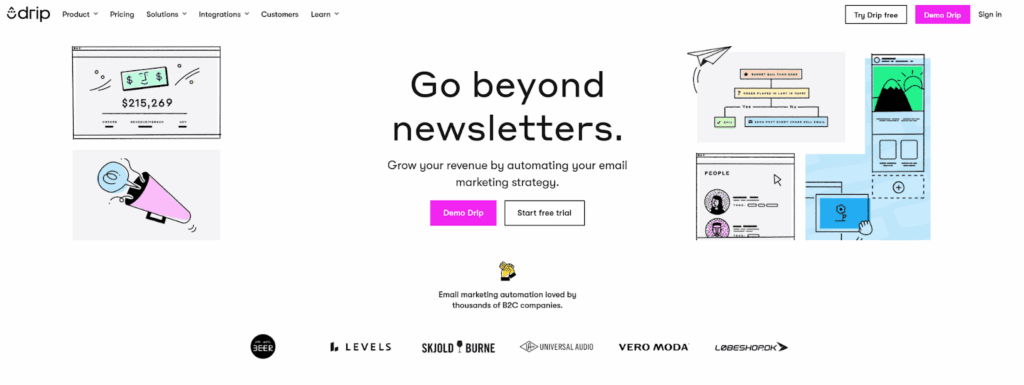
Drip is a marketing automation tool built specifically for eCommerce, making it a strong choice for Shopify merchants that want behavior-based workflows and tailored segmentation. Its visual workflow builder is intuitive, allowing brands to design customer journeys that automatically adapt to browsing patterns, purchase behavior, and engagement signals.
Drip excels at personalization. From dynamic product recommendations to targeted upsell flows, the platform helps Shopify stores deliver messages that feel tailored and relevant. Its segmentation capabilities also allow merchants to group customers by attributes like purchase frequency, lifetime value, or specific product interest.
Key Features
- Visual workflow builder designed for eCommerce behavior
- Segmentation based on browsing, engagement, and purchase intent
- Pre-built playbooks for abandoned carts, win-backs, and upsells
- Dynamic product recommendations pulling directly from Shopify
- Email and SMS automation in one dashboard
- Integration with Facebook Custom Audiences and Google Ads
Even the best email sequences fail if your product presentation seem to lack impact.
Pro Tip: Discover proven product page optimization techniques in our comprehensive guide on Shopify product page to ensure automation traffic converts into actual sales, not just clicks.
6. HubSpot
G2 Review: ★4.7/5
Best for: Centralized marketing, CRM, and automation for Shopify stores scaling across multiple channels.

HubSpot’s Marketing Hub integrates directly with Shopify to provide merchants with a complete, unified view of every customer journey. It syncs customer profiles, purchase data, and store behavior into HubSpot’s CRM, enabling advanced email workflows, smart content personalization, and detailed revenue attribution reporting.
Its automation features go beyond marketing. HubSpot connects marketing, sales, and support, allowing Shopify brands to automate lead nurturing, manage pipelines, and improve customer experience in one system. For stores that want a platform capable of supporting full business operations, HubSpot is one of the strongest options.
Key Features
- Unified CRM with automated segmentation
- Workflow builder for email, ads, forms, and lifecycle automation
- Smart content personalization based on user behavior
- Revenue attribution reporting tied directly to Shopify orders
- A/B testing across emails, workflows, and landing pages
- Multi-channel automation including email, ads, and chat
7. Mailchimp
G2 Review: ★4.4/5
Best for: Simple and beginner-friendly email automations for small Shopify stores.
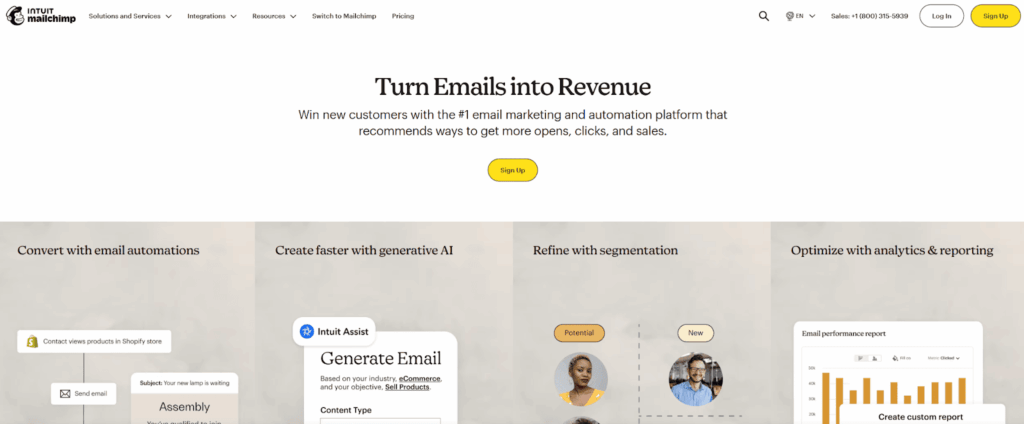
Mailchimp is a popular choice for Shopify merchants who want an easy way to set up email automations without complex workflow builders. Its interface is intuitive, and its templates make it easy for new store owners to launch abandoned cart emails, welcome sequences, and product recommendation campaigns. While it’s not as advanced as Klaviyo or Drip, Mailchimp remains an accessible and reliable option for early-stage eCommerce brands.
Shopify merchants benefit especially from Mailchimp’s basic segmentation features and product recommendation blocks. The platform also supports multichannel outreach by integrating social ads and landing pages into one dashboard.
Key Features
- Drag-and-drop email editor with customizable templates
- Basic behavioral automation for Shopify (welcome, cart recovery, follow-up)
- Product recommendation modules based on Shopify data
- Audience segmentation for targeted messaging
- Integration with Facebook and Instagram ads
- Detailed campaign reporting and delivery insights
8. PushOwl
G2 Review: ★4.6/5
Best for: Web push notifications for abandoned cart recovery and flash promotions.

PushOwl is designed specifically for Shopify merchants who want to reach customers instantly via browser notifications — even when they aren’t on the store’s website. This makes it especially effective for abandoned cart recovery and flash sale announcements.
The platform requires no email or phone number from customers; a single click subscribes them to push notifications. This removes friction and turns anonymous visitors into reachable leads. PushOwl’s automation templates make it easy to launch cart recovery notifications, restock alerts, and promotional campaigns.
Key Features
- One-click web push subscriber collection
- Automated abandoned cart recovery flows
- Scheduled flash sale and back-in-stock notifications
- Segmentation based on behavior and engagement
- Native Shopify integration for easy setup
- Real-time analytics for open rates, click rates, and conversions
9. Privy
G2 Review: ★4.5/5
Best for: On-site popups, exit-intent forms, and SMS/email list growth.

Privy is a Shopify-focused tool designed to capture more leads directly from your storefront through targeted popups and forms. It’s particularly strong for merchants who want to boost newsletter signup rates, decrease cart abandonment, and add SMS to their marketing mix without complex setup.
With Privy, Shopify stores can launch exit-intent popups, spin-to-win campaigns, cart saver messages, and welcome flows that trigger immediately after signup. The tool also supports automated email and SMS sending, making it a solid all-in-one solution for stores looking to grow their subscriber base and recover sales.
Key Features
- Exit-intent and cart saver popups optimized for conversions
- Automated welcome emails and SMS messages
- On-site audience targeting based on behavior
- Customizable popup templates
- Segmentation for targeted messaging
- Easy integration with Shopify and other email platforms
10. Tidio
G2 Review: ★4.7/5
Best for: Conversational automation through chatbots and live chat.

Tidio combines live chat, AI chatbots, and conversational automation to help Shopify stores assist customers instantly. It’s ideal for merchants seeking to reduce response times, improve customer satisfaction, and automate common support questions like order tracking or product availability.
Its chatbot builder allows stores to automate cart recovery, answer FAQs, recommend products, and even collect lead information. Tidio integrates directly with Shopify’s backend, pulling product, customer, and order data into each conversation for a more personalized experience.
Key Features
- Live chat with real-time shopper visibility
- AI-powered chatbots that automate conversations
- Pre-built chatbot templates for Shopify needs (cart recovery, FAQ, upsells)
- Integration with Shopify to access product/ordering data
- Email and Messenger integration for omnichannel messaging
- Performance analytics for chat-based conversions
How to Choose the Right Shopify Marketing Automation Tool?
1. Clarify Your Goals
- Decide what you want to automate: email, SMS, multi-channel outreach, on-site engagement, or full customer lifecycle.
- Think in terms of outcomes: more repeat purchases, better engagement, higher conversion, or smoother internal workflows.
2. Match Tools to Your Main Use Cases
- Email & SMS automation:
- Look at tools like Klaviyo, Omnisend, or Drip for deep eCommerce personalization that plugs directly into Shopify data.
- Look at tools like Klaviyo, Omnisend, or Drip for deep eCommerce personalization that plugs directly into Shopify data.
- Multi-channel outreach & B2B workflows:
- If you’re contacting influencers, wholesale partners, or B2B leads, Snov.io is a strong option with email sequences, verification, and CRM integrations.
- If you’re contacting influencers, wholesale partners, or B2B leads, Snov.io is a strong option with email sequences, verification, and CRM integrations.
- Full CRM and customer lifecycle management:
- For end-to-end automation across marketing, sales, and support, consider ActiveCampaign or HubSpot.
- For end-to-end automation across marketing, sales, and support, consider ActiveCampaign or HubSpot.
- On-site engagement & list growth:
- If your focus is pop-ups, chat, and conversions, tools like Privy or Tidio may be a better fit.
3. Assess Ease of Use
- If you’re new to automation, prioritize tools with templates and guided workflows.
- If you have a marketing or RevOps team, advanced visual builders and deeper customization may be worth the learning curve.
4. Check Pricing and Scalability
- Compare free plans, trials, and entry-level tiers based on your current list size and traffic.
- Make sure the pricing still works as your contact list, sending volume, and automation complexity grow.
5. Test Fit With Your Existing Stack
- Confirm native Shopify integration and key connections (CRM, helpdesk, analytics, ad platforms).
- Run a short trial to see how well it fits your team’s daily workflow.
Your automation strategy should align with your overall Shopify growth plan.
Pro Tip: Review our detailed breakdown on Shopify website development cost to understand how automation tools fit into your broader eCommerce investment and growth roadmap.
Conclusion
Shopify marketing automation helps you scale personalized, timely communication without piling on manual work. With the right tools, you can nurture new visitors, recover abandoned carts, and turn one-time buyers into loyal customers while your workflows run in the background.
Platforms like Snov.io, Klaviyo, Omnisend, ActiveCampaign, Privy, PushOwl, and Tidio cover everything from outreach and segmentation to on-site engagement and real-time chats. The best choice is the one that fits your goals, your team, and your tech stack.
When automation is set up thoughtfully, it becomes a real growth engine that lifts conversions, improves retention, and makes every customer interaction feel more relevant and valuable.






Post a Comment
Got a question? Have a feedback? Please feel free to leave your ideas, opinions, and questions in the comments section of our post! ❤️