

Best Platform for AI Answer Presence Tracking in 2026
When shoppers use Google AI Overviews, Google AI Mode, ChatGPT, Gemini, or Perplexity to research products and compare brands, your business may appear in an answer before a shopper visits your website. AI answer presence tracking helps you see where your brand is mentioned, which pages are cited, and which competitors appear for the same questions.
AI chatbot use is becoming more widespread in the US. A report found that 49% of US adults had used AI chatbots, up from 33% in 2024 (Pew Research Center). That shift is why AI search tracking now matters for brands.
Website analytics show traffic and conversions, while traditional SEO tools track search rankings. Neither metric alone shows how often AI-generated answers mention your brand, cite your pages, or feature competitors.
AI visibility platforms help fill that measurement gap. Here is an overview of the platforms leading the way in AI answer presence tracking, what each one does well, and how to choose between them.
Key takeaways
- AI answer presence tracking shows where your brand appears, how it is described, and which sources AI tools cite.
- AI visibility platforms vary in their coverage, prompt limits, reporting features, and integration with traditional SEO tools.
- Track My Visibility, Peec AI, Otterly.AI, and Profound are dedicated AI visibility tools, ranging from entry-level to enterprise.
- SISTRIX and Ahrefs Brand Radar suit teams that already use those platforms for classic SEO.
- Prioritize platform coverage, prompt tracking, sentiment, and source data when you compare options.
Why AI answer tracking matters
AI answer tracking helps teams identify the product pages, buying guides, and comparison content that appear in AI responses. It can also reveal queries where competitors are cited but your brand is absent, helping you prioritize content updates.
For online stores, this is becoming part of everyday SEO work. A solid plan for eCommerce AI SEO starts with knowing where you stand today, which means measuring AI visibility the way you measure rankings.
What to look for in a tracking tool
Not every tool measures the same things. Before you compare names, decide which of these capabilities matter most to your team:
- Platform coverage: Which AI systems are tracked, such as Google AI Overviews, AI Mode, ChatGPT, Gemini and Perplexity
- Prompt tracking: Whether you can monitor your own list of prompts over time
- Brand perception: Sentiment, share of voice, and how AI tools describe you
- Source data: Which URLs AI answers cite, so you know which pages earn mentions.
- Data methodology and freshness: Whether results come from a predefined prompt database or your own tracked prompts, which locations and languages are supported, and how frequently the data is refreshed.
- Competitor benchmarking: How your visibility compares with rivals on the same prompts
Pro Tip: Tracking mentions is only one part of AI visibility. Understanding how LLM citations work can help you distinguish between brand mentions and linked sources when evaluating your visibility data.
What are the best AI visibility tools in 2026?
Choosing a platform depends on which AI search platforms it monitors, how it tracks brand mentions and citations, and the depth of reporting it provides. The tools below offer different approaches to measuring AI visibility, from features integrated with traditional SEO tools to dedicated AI tracking and analytics.
1. Semrush
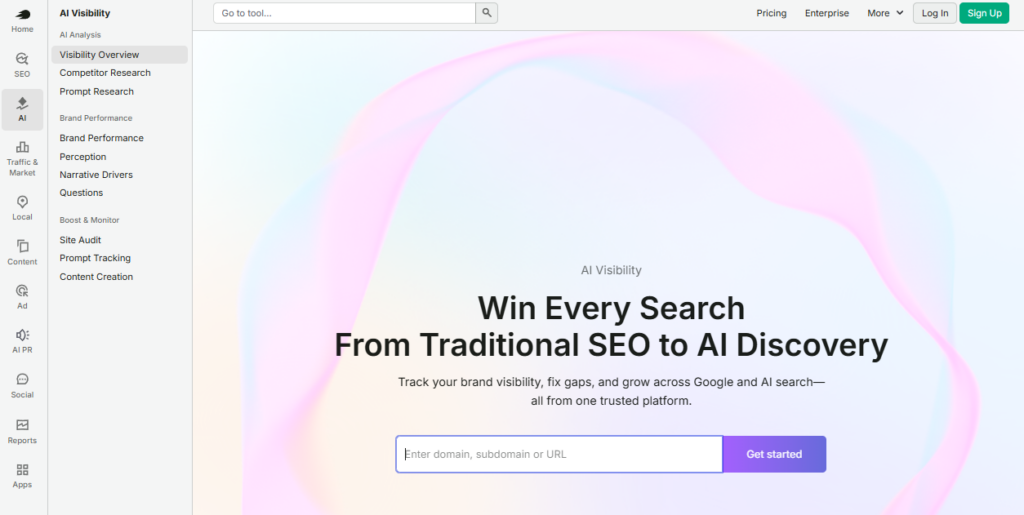
Semrush combines AI visibility research with its established SEO tools. Its AI Visibility Toolkit provides brand and citation insights, while Prompt Tracking monitors selected prompts daily across ChatGPT Search, Google AI Mode, and Gemini. Available metrics and update frequency depend on the report.
Key features:
- Prompt Tracking with daily updates on your own prompts in Google AI Mode, AI Overviews, Gemini, and ChatGPT Search
- Brand Performance reports on sentiment and share of voice across ChatGPT, Perplexity, Gemini, and Google AI Mode
- Competitor and prompt research powered by a large database of real AI prompts and responses
Best for: Teams that want AI visibility and traditional SEO data side by side in one workflow.
2. Track My Visibility
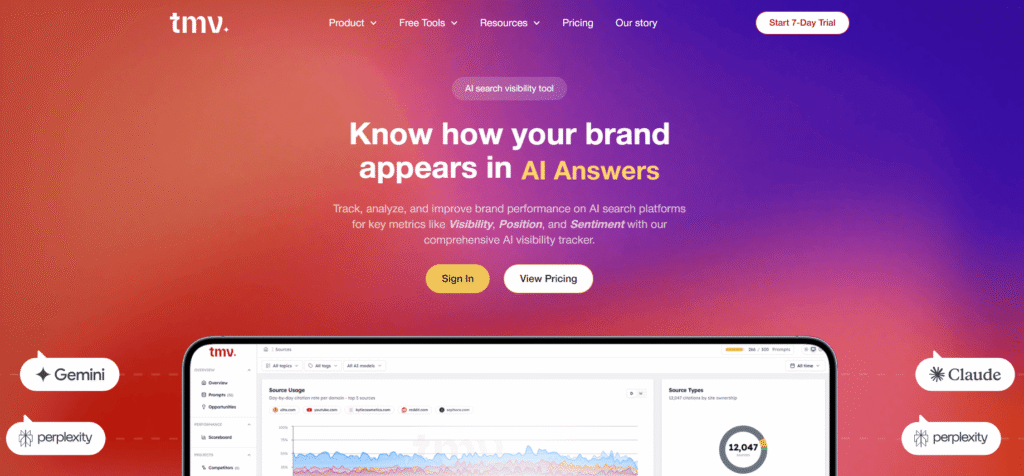
Track My Visibility is a dedicated AI search visibility platform for brands and agencies. It helps teams monitor brand mentions and citations across supported AI platforms, compare visibility with competitors, and identify content gaps and opportunities to improve their presence in AI-generated answers.
Key features:
- Brand mention, visibility, and citation tracking across supported AI platforms.
- Competitor benchmarking across tracked prompts and AI models.
- URL-level citation reports to identify pages referenced in AI answers.
- Content gap analysis and actionable recommendations for improving AI visibility.
- A free AI Visibility Checker for an initial assessment of your brand’s presence.
Best for: eCommerce brands and agencies that run AI search as their own program and want tracking plus clear next steps.
3. SISTRIX
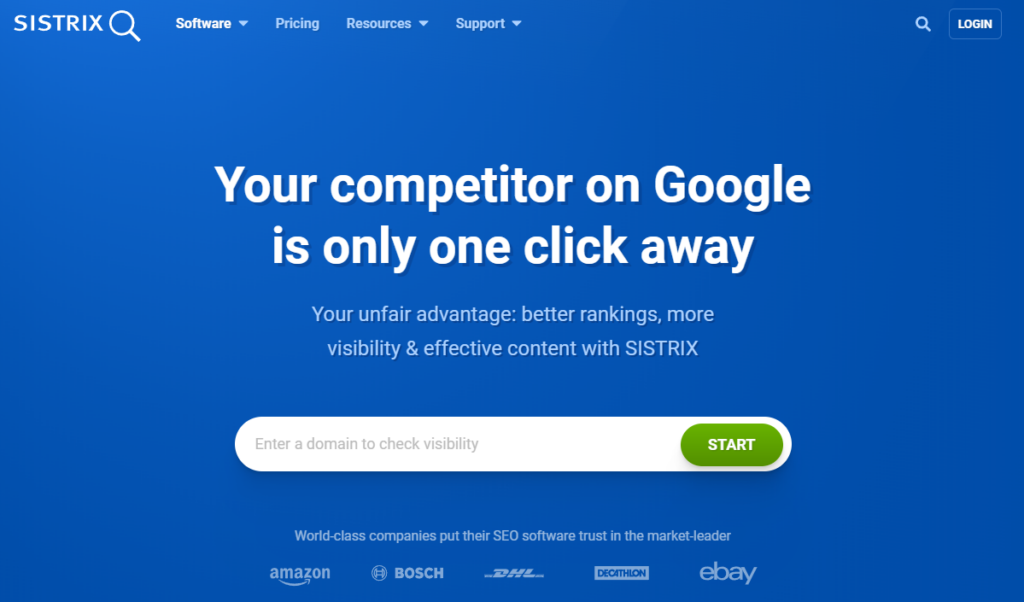
SISTRIX combines Google AI Overview analysis with a dedicated AI/Chatbot Research Tool. Its Google search analysis helps users identify AI Overviews and cited URLs, while its chatbot tool examines brand, entity, and source visibility across supported chatbots using a predefined prompt dataset.
Key features:
- AI Overview filters and a SERP archive that stores the full answer text and cited sources.
- AI/Chatbot Research uses a predefined dataset of 10 million prompts for each supported language: German, English, French, Spanish, and Italian.
- Entity recognition that identifies brand and competitor mentions in responses from supported chatbots, including ChatGPT, Gemini, and DeepSeek.
Best for: SEO teams that already use SISTRIX and want to add AI Overview and chatbot research to their existing visibility analysis.
4. Ahrefs Brand Radar
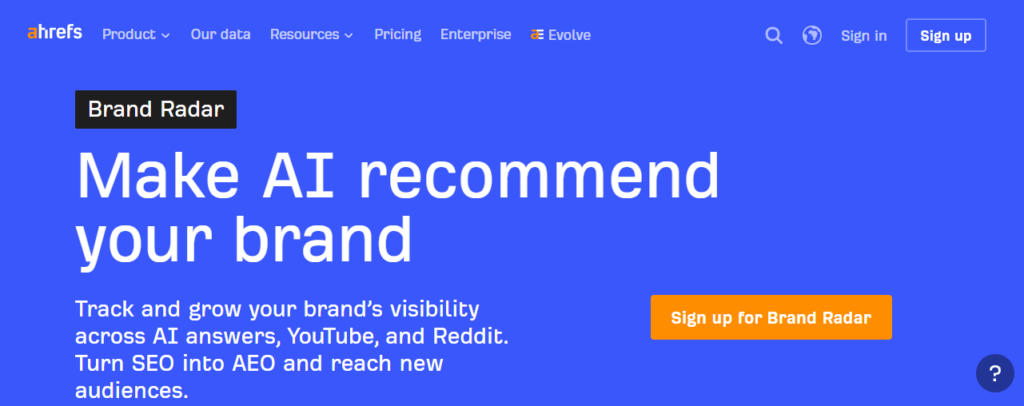
Ahrefs Brand Radar helps teams research how brands appear across AI-generated answers and compare their visibility with competitors. It reports brand mentions, citations, and AI share of voice, while helping users identify cited pages and topics where their brand is missing from AI answers.
Key features:
- AI visibility research across Google AI Overviews, Google AI Mode, ChatGPT, Perplexity, Gemini, and Microsoft Copilot, with Claude available for custom prompts. New data collection for Grok is currently unavailable.
- Brand mentions, citations, and AI share-of-voice comparisons.
- Cited-page analysis and competitor visibility research.
- Custom prompt tracking with selectable AI assistants, locations, and refresh frequencies, including daily, weekly, or monthly checks where supported.
Best for: Teams that already use Ahrefs for SEO and want to research AI visibility, cited sources, and competitor presence within the same ecosystem.
5. Peec AI
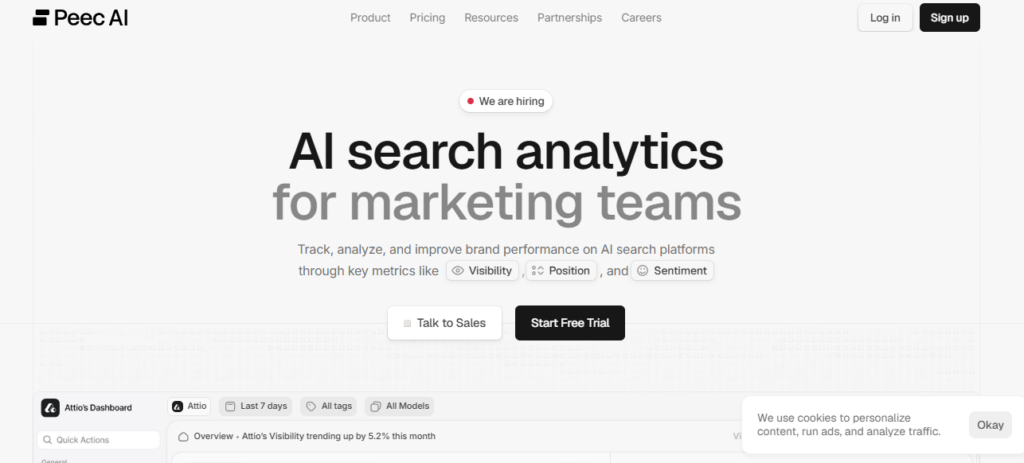
Peec AI is a dedicated AI visibility platform with an approachable entry point. It tracks how often your brand appears across major Peec AI is a dedicated AI search analytics platform for tracking brand visibility across supported AI models. It helps teams compare mentions, sentiment, and competitor presence over time.
Key features:
- Coverage across supported AI platforms, with available models depending on the selected plan.
- Sentiment tracking and competitor benchmarking.
- Starter plan includes 50 tracked prompts, daily tracking, and a choice of three AI models.
Best for: Smaller teams starting with AI visibility tracking.
6. Otterly AI
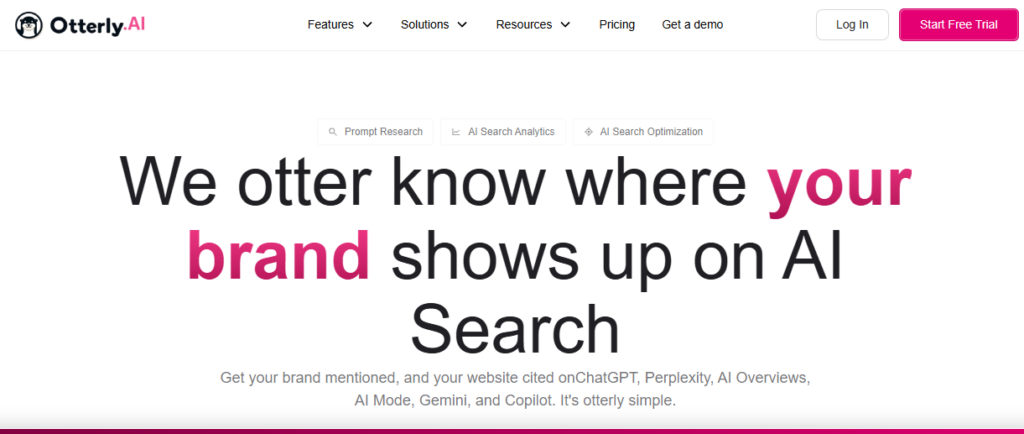
Otterly.AI combines AI search visibility monitoring with generative engine optimization (GEO) audits. It helps marketers track brand mentions and visibility across supported AI search engines, review citation sources, and identify potential optimization issues.
Key features:
- AI search monitoring across ChatGPT, Google AI Overviews, Perplexity, and Microsoft Copilot, with Google AI Mode, Gemini, and Claude available as paid add-ons.
- Citation-source analysis, content audits, and GEO recommendations to identify potential optimization opportunities.
- Brand visibility, mention, and sentiment reporting.
Best for: Marketers who want lightweight, prompt-specific tracking.
7. Profound
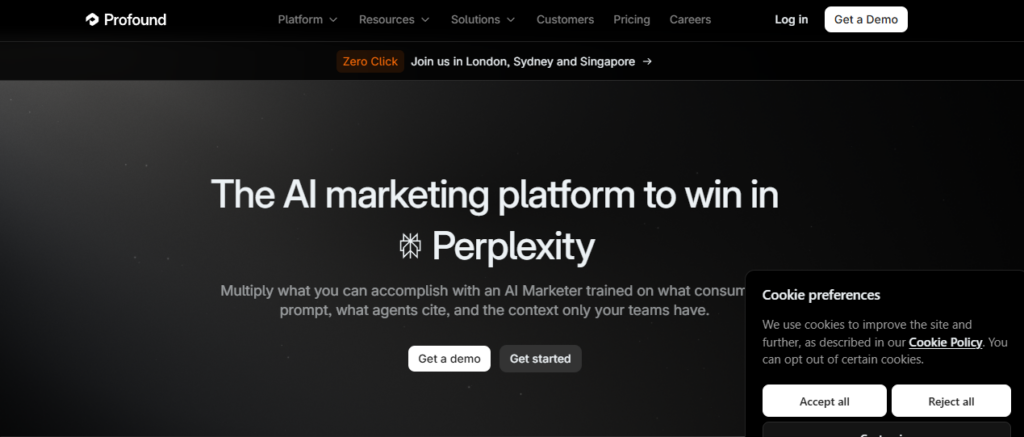
Profound targets larger brands that need detailed citation data. It tracks visibility at both the brand and page level across AI Profound offers AI visibility analytics for brands that need detailed insight into how their content and products appear in AI-generated answers. Its Shopping Analysis focuses on ChatGPT Shopping, helping eCommerce teams examine product visibility, placement, merchant links, product attributes, and SKU-level performance.
Key features:
- Brand and page-level citation analysis.
- ChatGPT Shopping product visibility and placement tracking.
- SKU-level analysis of product visibility and cited information.
- Insights into how AI shopping results describe product attributes and display merchants.
Best for: Enterprise teams and retailers that need deep citation and product data.
Top AI visibility platforms at a glance
The table below compares each platform’s primary strengths and the teams it is best suited for. Use it to narrow your options before reviewing the features and plan limits that matter to your workflow.
| Platform | Main strength | Best for |
| Semrush | AI visibility research and custom prompt tracking alongside SEO tools | Teams managing SEO and AI search together |
| Track My Visibility | Dedicated AI visibility monitoring, citation analysis, and optimization opportunities | Brands and agencies looking for prompt-level tracking and actionable insights |
| SISTRIX | Google AI Overview analysis and chatbot research | Teams already using SISTRIX visibility data |
| Ahrefs Brand Radar | AI visibility research, cited pages, and competitor benchmarking | Existing Ahrefs users and SEO teams |
| Peec AI | AI visibility analytics with daily tracking on its Starter plan | Smaller teams starting with AI search monitoring |
| Otterly.AI | AI visibility monitoring and GEO audits | Teams that want monitoring and optimization analysis |
| Profound | Detailed AI visibility and ChatGPT Shopping analytics | Enterprise and eCommerce teams |
Use this comparison as a starting point rather than a definitive ranking. Before choosing a platform, verify its current AI model coverage, prompt limits, reporting frequency, and plan-specific features. A short trial using the same prompts across your shortlisted tools can help you assess which one best fits your team’s needs.
Conclusion
Choose a platform based on the AI systems, prompts, and reports your team needs to track. If you want AI visibility data alongside traditional SEO metrics, Semrush or Ahrefs may fit your existing workflow.
If you want dedicated AI visibility monitoring, compare Track My Visibility, Peec AI, and Otterly.AI based on supported platforms, prompt limits, citation reporting, and optimization features. For eCommerce teams that need product-level analysis of ChatGPT Shopping results, Profound is worth evaluating.
For eCommerce brands looking to improve visibility across AI-generated answers and traditional search, explore our AI SEO services.
Before committing to a platform, test a consistent set of product-related and comparison prompts. Review brand mentions, cited URLs, competitor appearances, and changes over time. Treat these results as directional visibility data, then compare them with referral traffic and conversions to understand their business impact.
FAQ
1. What is AI answer presence tracking?
AI answer presence tracking measures how often a brand appears in AI-generated responses across supported platforms, such as ChatGPT, Gemini, Perplexity, and Google AI Overviews. Depending on the tool, reports may also include citations, competitor mentions, sentiment, and the sources used in those answers.
2. Which AI platforms should I track first?
Start with the AI search platforms most relevant to your audience and buying journey. For many US businesses, Google AI Overviews and ChatGPT are useful starting points. Add Google AI Mode, Gemini, Perplexity, or other supported platforms based on your audience and the coverage available in your chosen tool.
3. How is AI visibility different from rankings?
Traditional SEO rankings show where a webpage appears in search results for a query. AI visibility measures how often a brand or its pages appear in AI-generated responses, including brand mentions and citations. A brand can appear in an AI answer without receiving a website click.
4. How many prompts should I track?
Start with 10 to 20 prompts covering product discovery, category comparisons, use cases, and buying questions. Track the same prompts across your priority AI platforms, then expand the list based on gaps in brand mentions, citations, and competitor visibility. Adjust the number to fit your tool’s prompt limits and budget.
Resources:
1. Americans’ Views on AI Chatbots, Smart Devices and AI’s Impact | Pew Research Center






Post a Comment
Got a question? Have a feedback? Please feel free to leave your ideas, opinions, and questions in the comments section of our post! ❤️